

You hear “8 inches” all the time. A phone screen. A knife blade. A haircut length. But what does it actually look like in your hand?
8 inches equals 20.32 cm, or about two-thirds of a foot. That’s the short answer. Now let’s make it real.
This guide breaks down 8 inches in real life using things you already own. No rulers required, no guesswork left over. Just plain, visual answers.
What Does 8 Inches Actually Feel Like?
Picture your hand stretched out, thumb to pinky. For most adults, that hand span lands close to 8 inches. It’s not huge. It’s not tiny either. It sits right in that useful middle zone.
Think of it as the length of a standard envelope or a small ruler kids carry in a pencil case. It’s long enough to matter, short enough to fit in your palm or pocket.
This 8 inch measurement shows up in daily use more than you’d expect. Once you start noticing it, you’ll spot it everywhere: kitchen drawers, office desks, even your own hair.
8 Inches in Different Units (Conversion Table)
Numbers help, but only when they’re side by side. Here’s how 8 inches breaks down across common units of measurement.
| Unit | Value |
|---|---|
| Centimeters | 20.32 cm |
| Millimeters | 203.2 mm |
| Meters | 0.2032 meters |
| Feet | 0.67 feet |
| Yards | 0.22 yards |
This conversion table comes in handy for shopping, especially with international products. A US listing might say 8 inches while a UK or EU site shows centimeters. Now you can match them instantly.
Keep this chart bookmarked. It saves a Google search every time you’re comparing product dimensions across two different stores.
Why 8 Inches Is So Common in Real Life
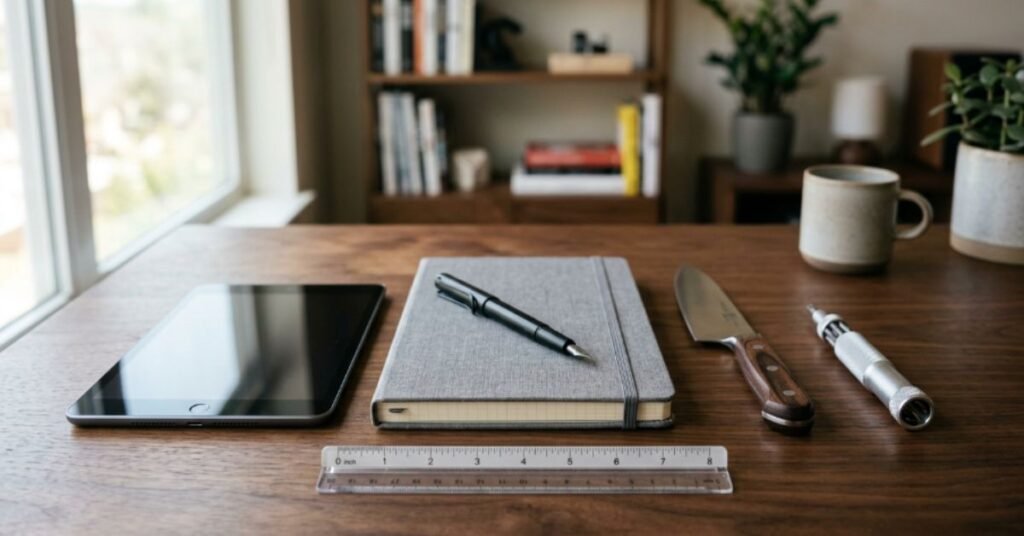
Ever wonder why so many things land at exactly 8 inches? It’s not a coincidence.
Designers and manufacturers lean on this length because it fits human hands well. It’s a sweet spot for human ergonomics, big enough to hold comfortably, small enough to not feel bulky. Think tablet cases, kitchen tongs, or a compact laptop sleeve.
It also works for storage. An 8 inch item slides into backpack pockets, drawers, and shelves without a fight. That’s why you’ll find this length baked into everything from stationery to electronics.
There’s a comfort factor too. Human comfort and usability studies often point to the 6 to 10 inch range as the ideal grip zone for handheld tools. Eight inches sits right in the middle. That’s not an accident, that’s design.
17 Things That Are 8 Inches Long (Real-Life Examples)
Let’s get specific. Here are 17 everyday objects that measure close to 8 inches long, so you can picture the length without pulling out a tape measure.
Human Hair (8 Inches Length)
Hair length of 8 inches usually reaches somewhere between shoulder-length and mid-back, depending on where it starts growing from the scalp. If you’re picturing a haircut, this is roughly ear-to-shoulder and then some.
Hairstylists often use this exact number when talking about donation length or a fresh trim. It’s a useful hair measurement reference if you’re planning a big chop or growing out a style.
Hand Length / Hand Span
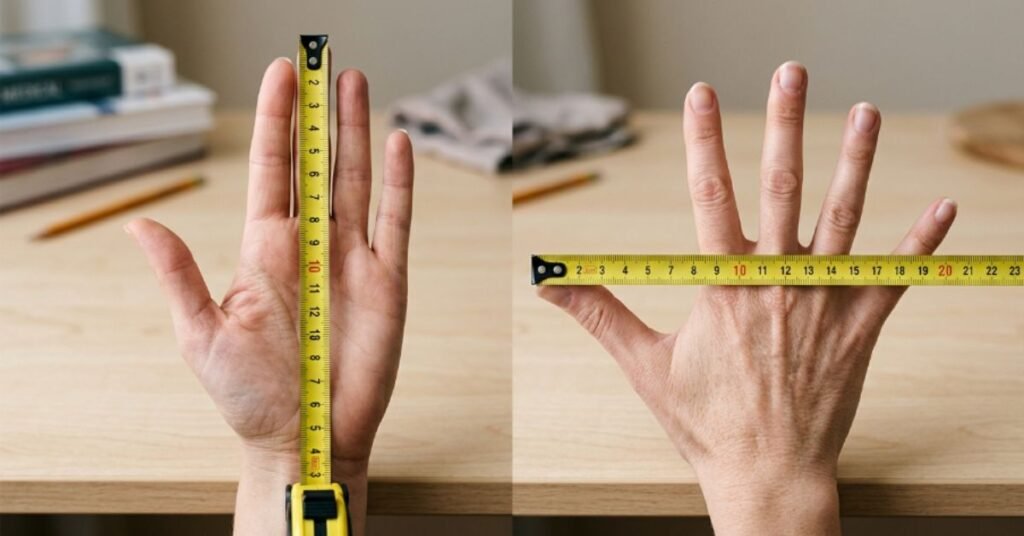
Your own hand span, thumb to pinky stretched wide, is one of the best built-in tools you own. Most adult hands measure close to 8 inches this way.
This makes it a genuinely personalized measurement. No tools, no apps, just your own hand doing the math for you on the fly.
Smartphone + Case (Combined Length)
A modern smartphone with a protective case often nears 8 inches in total length, especially larger models. Add a case and a pop socket, and you’re right there.
It’s one of the easiest gadgets to use as a mental size reference since almost everyone carries one.
Magazine Width
Most magazines measure close to 8 inches across the width. That’s the standard for glossy print publications sold at newsstands and checkout counters.
Next time you flip through one, you’re holding a near-perfect 8 inch visual reference without even trying.
Ribbon (Gift Wrapping Piece)
A single cut piece of ribbon used for a bow on a wrapped gift often runs about 8 inches before you tie it off. Enough length to make a full loop and a knot.
It’s a small but handy way to eyeball this measurement during the holidays when you’re wrapping gifts non-stop.
Backpack Pocket Width
That front zipper pocket on your backpack? It’s usually built around 8 inches wide. Just enough room for a wallet, phone, and a few odds and ends.
This width isn’t random. It matches common accessory sizes so nothing rattles around loose inside.
Hardcover Notebook
A hardcover notebook, the kind used for journaling or note-taking, typically runs close to 8 inches in height. It’s the go-to size for stationery lovers who want something sturdy but portable.
If you own one on your desk right now, measure it. There’s a good chance it’s within half an inch of this mark.
Envelope (Large Card Size)
A greeting card envelope, the larger kind used for invitations, measures close to 8 inches on its longer edge. It needs to be roomy enough to fit a folded card without creasing it.
This is one of the most reliable visual comparisons since almost every household has envelopes tucked in a drawer somewhere.
Ruler (Short Version)
Some student rulers come in a compact 8 inch version instead of the standard 12 inch one. It’s easier to toss into a pencil case without poking through the zipper.
If you’ve got one of these short rulers lying around, it’s a literal, exact measuring tool for this entire article.
Kitchen Tongs (Small)
Small kitchen tongs, the type used for salad tossing or plating, usually measure around 8 inches from handle to tip. Long enough to reach into a pan safely.
Compare this to the larger 12 inch grilling tongs, and you’ll notice the size difference immediately.
TV Remote Control
Most TV remotes land somewhere close to 8 inches in length, give or take. It’s shaped to sit comfortably in one hand while your thumb reaches every button.
This is a great household object to grab right now if you want a quick, physical check of this length.
Shoe Length (Small Size)
A small footwear size, often a kids’ size 3 or 4, measures close to 8 inches from heel to toe. Parents shopping for growing kids run into this number constantly.
It’s a practical size comparison if you’re trying to picture proportions for a child rather than an adult.
Tablet Cover / Case
A tablet cover or tablet sleeve for smaller tablet models often measures close to 8 inches across. It needs to snugly wrap the device without adding bulk.
This ties directly into product specifications you’ll see listed on shopping sites for tablet dimensions.
Desk Organizer Tray
A desk organizer tray, the kind holding pens, clips, and sticky notes, commonly measures around 8 inches in length. Compact enough for a corner of your desk.
It’s one of those office supplies you interact with daily without ever thinking about its actual size.
Bread Knife (Compact)
A compact bread knife, shorter than the standard chef’s version, has a blade length close to 8 inches. Long enough to slice through a full loaf in one smooth pass.
Kitchen drawers often hold a mix of blade lengths, and this compact size fills the gap between paring knives and full-size chef knives.
Picture Frame (Small)
A small picture frame, the kind used for desk photos rather than wall displays, often measures 8 inches on its longer side. Just right for a favorite snapshot.
This is a common home organization item, and it’s another easy physical reference if you’ve got one sitting on a shelf.
Laptop Sleeve (Compact Width)
A compact laptop sleeve built for smaller laptops or tablets often measures close to 8 inches in width. It protects the device while staying slim inside a bag.
If you’re shopping for accessories to protect your electronics, this measurement shows up constantly in product listings.
How to Measure 8 Inches Without a Ruler
No tape measure nearby? No problem. You’ve got a few reliable tricks for measuring without a ruler.
Use Your Hand Span
Stretch your thumb and pinky as wide as they’ll go. For most adults, that thumb-to-pinky span lands close to 8 inches. It’s not perfectly precise, but it’s fast and always available.
This trick works great for quick measurement situations, like checking if something will fit in a drawer before you buy it.
Use a Familiar Object
A standard credit card is about 3.4 inches long. Line up two and a bit of a third, and you’re close to 8 inches. This kind of familiar object comparison beats guessing every time.
You can also use a smartphone, since most phones today land somewhere between 5.5 and 6.5 inches, leaving just a small gap to estimate.
Combine Smaller References
Sometimes one object isn’t enough, so stack a couple of known items. A credit card plus a thumb-width gap gets you shockingly close to 8 inches without any tool at all.
This method is perfect for estimating length on the fly, whether you’re at a store or rearranging furniture at home.
8 Inches Compared to Common Drink Cans
Here’s a fresh angle worth knowing. A standard Monster Can measures close to 6.3 inches tall, meaning 8 inches is noticeably taller, roughly one and a half cans stacked partially on top of each other.
This kind of object comparison helps when you’re picturing height rather than width or length. Not everything is measured flat on a table, and drink cans give you a vertical visual reference instead.
Next time you grab a can from the fridge, hold it up next to a ruler or notebook. You’ll see exactly how 8 inches stretches beyond it.
8 Inches vs 12 Inches: What Changes?
It helps to see 8 inches next to its bigger cousin, 12 inches, which equals a full foot. The jump from 8 to 12 inches adds exactly 4 more inches, and that gap is bigger than it sounds.
Think of a short ruler versus a standard ruler. Or a compact bread knife versus a full chef’s knife. That extra 4 inches often marks the line between “portable size” and “full size” in product design.
Understanding this size guide helps when you’re shopping and a listing only gives you one number. Now you can mentally place it against the full foot mark instead of guessing blind.
Why This Matters for Shopping and DIY Projects
Knowing this measurement isn’t just trivia. It saves you from returns.
Ever ordered something online that looked “about right” in photos, then it showed up way too small or too big? That’s the estimate measurements trap. Once you’ve got a solid mental reference for 8 inches, product photos stop lying to you.
This matters even more for DIY and home projects. Cutting fabric, measuring shelf space, or fitting a new gadget into an old desk organizer, all of it gets easier once 8 inches becomes a real, visual number instead of an abstract one.
FAQs
Is 8 inches a big measurement? Not really. It’s mid-range, bigger than a phone but smaller than a standard ruler. Useful for compact, portable items.
How many centimeters is 8 inches? Exactly 20.32 cm. Round it to 20 cm for quick mental math.
What household item is closest to 8 inches? A large greeting card envelope or a hardcover notebook usually lines up almost exactly.
Can I measure 8 inches using my hand? Yes. Most adult hand spans, thumb to pinky, land close to 8 inches. It won’t be lab-precise, but it’s a solid everyday estimate.
Is 8 inches longer than a smartphone? Slightly, in most cases. Add a case, and many phones get close to or past this mark.
Why do so many products use 8 inch dimensions? Comfort and storage. It fits well in hands, pockets, and shelves without feeling bulky, which is why manufacturers default to it often.

James Walker is a content writer and researcher with a passion for making everyday information simple, useful, and easy to understand. He enjoys researching measurements, dimensions, size comparisons, and interesting facts and turning them into clear, engaging content for readers.
Through his work at HipeDigest, James focuses on providing informative and reader-friendly articles that combine accuracy, simplicity, and practical examples. His goal is to help readers discover useful information while making every topic enjoyable and easy to explore.
