


You’ve heard the number. 200 acres. But what does that actually look like?
Maybe you’re eyeing a large parcel for sale. Maybe you’re just curious after seeing a farm listing. Either way, numbers on paper don’t mean much until you can picture them.
This guide breaks down 200 acres into real, visual examples. No confusing math. No dry textbook talk. Just plain answers to the question everyone actually asks: how big is that, really?
200 Acres
Let’s start simple. An acre is a unit of land area, and it’s been around since medieval farming days when it described how much land a team of oxen could plow in one day.
200 acres is a serious chunk of land size. It’s big enough to hold a small farm, a golf course, or hundreds of homes, depending on how it’s used.
Picture a square roughly 2,950 feet on each side. That’s the rough shape of 200 acres if you squared it off evenly, though most real property size parcels are shaped by roads, rivers, or property boundary lines instead.
200 Acres into Different Units
Numbers help when you need exact figures for paperwork, permits, or land measurement records. Here’s the full area conversion breakdown for 200 acres:
- Square feet: 8,712,000 sq ft
- Square miles: 0.3125 sq miles
- Square meters: 809,371 sq meters
- Hectares: 80.9 hectares
- Square kilometers: 0.809 sq km
These figures matter if you’re comparing land across the metric system used outside the US. A buyer in Europe thinks in hectares, while a buyer in Texas thinks in acres. Knowing both keeps you speaking the same language.
How Big is 200 Acres? 8 Examples
Numbers on a spreadsheet don’t stick. Real-world land comparison does.
Below are eight ways to picture 200 acres, using things you’ve actually seen before. Sports fields, city blocks, even parking lots. This is where the area breakdown finally starts to make sense.
Example 1 – Football Fields Comparison
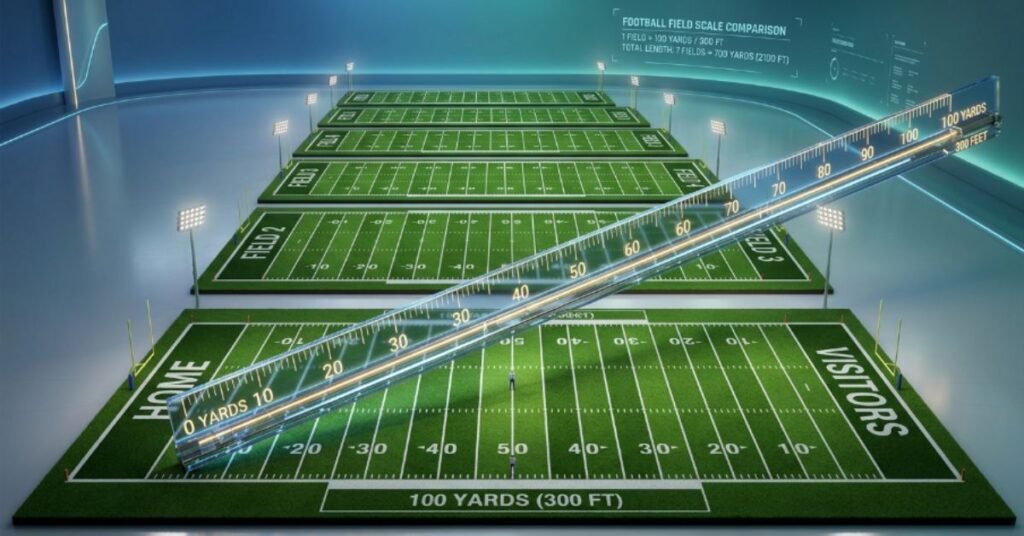
Everyone knows what a football field looks like. It’s the go-to unit for describing big spaces, and for good reason.
An American football field, including both end zones, covers about 1.32 acres. Using standard NFL field dimensions, 200 acres equals roughly 151 football fields lined up side by side.
That’s not one stadium. That’s an entire sports complex stretched across town. If you tried walking end to end across all of them, you’d be at it for a while.
Example 2 – Central Park Sections
New York’s Central Park spans 843 acres total, so 200 acres covers close to a quarter of the whole park.
Think about the Great Lawn (55 acres) and Sheep Meadow (15 acres) combined. Now multiply that open green space nearly three times over. That’s your 200 acres.
It’s a helpful visual land comparison for anyone who has strolled through Manhattan’s most famous park. You’d need several of its biggest lawns stitched together to match this land size.
Example 3 – City Blocks

Urban city blocks vary a lot depending on the city. A typical Manhattan block runs close to 2.75 acres, while blocks in Chicago or Detroit tend to be a bit larger.
Using an average of around 3 acres per block, 200 acres equals roughly 65 to 70 city blocks. That’s a whole neighborhood grid, not just a few streets.
If you’ve ever walked ten blocks and felt tired, imagine mapping out that entire stretch, then multiplying it several times over. That’s the scale we’re talking about here.
Example 4 – Walmart Supercenters
A Walmart Supercenter building alone covers around 4 to 5 acres. But the full site, including the parking lot, access roads, and loading areas, usually totals 20 to 25 acres.
That means 200 acres could hold roughly 8 to 10 full Walmart Supercenter properties, parking lots and all. Not just the stores. The entire footprint, including every parking space out front.
Next time you’re circling a Walmart lot looking for a spot, remember: you’re standing on maybe a tenth of what 200 acres actually covers.
Example 5 – Golf Courses
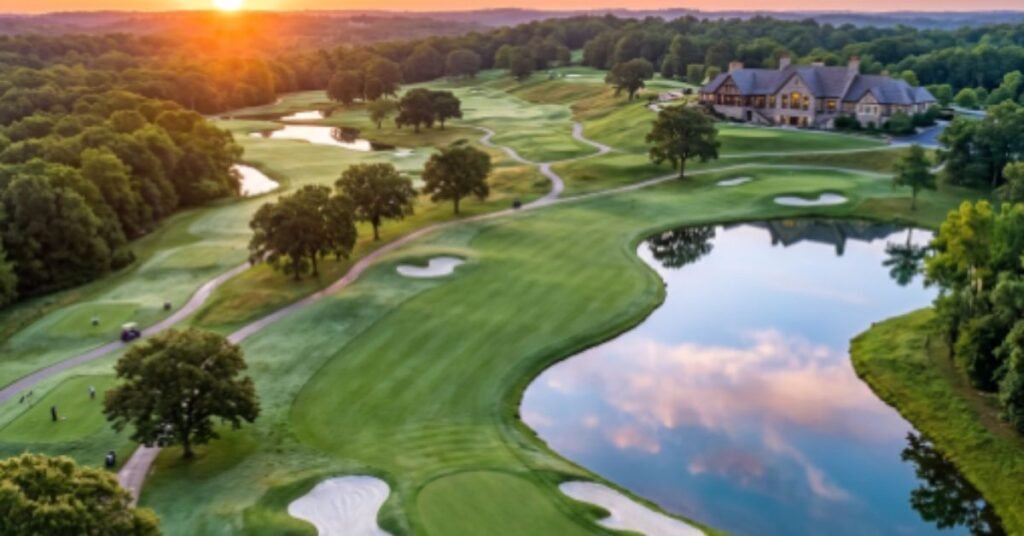
An 18-hole golf course eats up a surprising amount of land. A championship golf course typically spans around 150 acres once you count fairways, greens, roughs, and hazards.
An executive golf course, which is shorter and more compact, might only need 50 to 75 acres. So 200 acres comfortably fits one full championship course, with room left over for practice greens or a clubhouse.
Golfers walking 18 holes already cover several miles. Now imagine that entire course, plus extra land on the side. That’s your 200 acres in golfing terms.
Example 6 – Residential Subdivision
Here’s where land development gets interesting. A typical residential subdivision with quarter-acre lots can fit roughly 3 to 4 single-family homes per acre once you subtract space for streets, sidewalks, green spaces, and utility infrastructure.
That puts 200 acres at somewhere between 500 and 700 residential lots, depending on how the subdivision planning allocates common areas and roads.
That’s an entire small town’s worth of housing built from one single parcel. It’s easy to see why 200 acres attracts serious attention from residential developers.
Example 7 – Parking Spaces
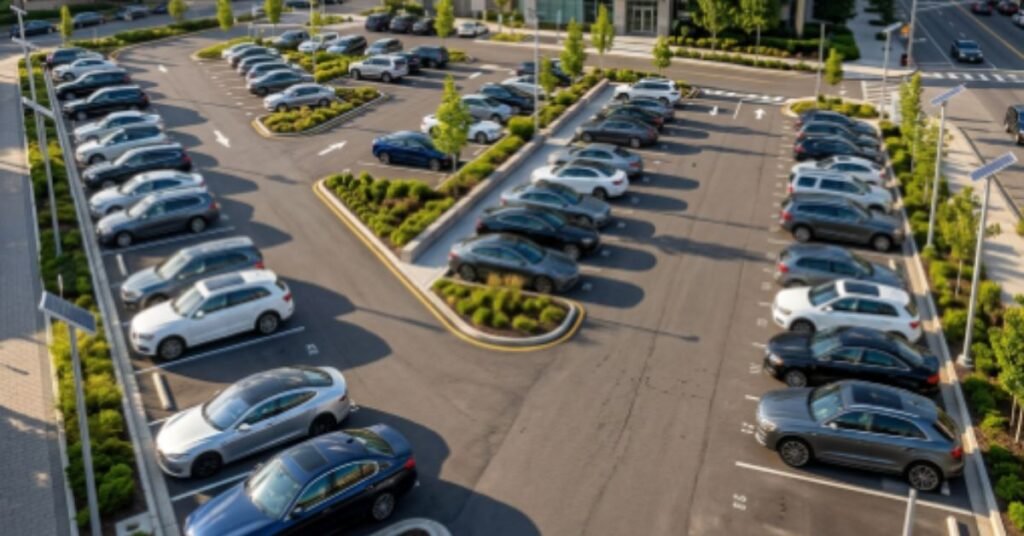
This one surprises people. A standard parking space, once you include drive lanes and circulation space, needs roughly 330 to 350 square feet.
Run the math and 200 acres could hold close to 24,000 to 26,000 parking spaces. That’s the scale you’d see at massive stadium parking lots or sprawling airport parking facilities.
Next time you park at a huge airport lot and can’t find your car, you’re getting a small taste of just how much ground 200 acres actually covers.
Example 8 – Agricultural Context – Farming Operations
For agricultural land, 200 acres is a meaningful but modest size. According to USDA data, the average U.S. farm sits around 460 acres, meaning 200 acres covers less than half of that.
Still, it’s plenty for real crop production. Corn farming at typical yields of 175 to 180 bushels per acre could produce around 35,000 bushels from 200 acres. Wheat production at 50 bushels per acre would yield roughly 10,000 bushels.
Of course, actual harvest numbers swing based on climate and soil quality each season. A family farm running 200 acres isn’t huge by national standards, but it’s a legitimate working operation, not a hobby plot.
How Many Steps in a Mile?
Since we’re talking distance, here’s a quick detour that ties everything together. The average adult takes somewhere between 2,000 and 2,500 steps to cover one mile, depending on stride length and pace.
That number matters once you start thinking about walking distance across a property this size. It turns an abstract acreage figure into something you can actually feel in your legs.
Walking and Driving Across 200 Acres
Knowing the square footage is one thing. Knowing how long it takes to physically move across the land is another, and it’s usually the question buyers ask first.
How Long Does It Take to Walk 200 Acres?
If 200 acres were shaped as a square, each side would run close to 2,950 feet, or a little over half a mile. Walking one side at an average pace of 3 miles per hour takes roughly 11 to 12 minutes.
Walking the full perimeter, all four sides, adds up to about 2.24 miles, which takes somewhere around 45 minutes at a steady clip. That’s assuming flat, clear terrain with no fences or creeks slowing you down.
Real properties rarely come in perfect squares though. Property boundary lines twist around roads, waterways, and neighboring lots, so actual walking time often runs longer than the flat math suggests.
Driving Time Around 200 Acres
Driving cuts that time down dramatically. At a cautious 25 miles per hour along an access road, circling the full 2.24 mile boundary takes roughly 5 to 6 minutes.
That’s assuming a road actually exists around the edge, which isn’t always true on raw rural land. Farmland and undeveloped open land often only have partial road access, meaning some sections require walking or off-road vehicles instead.
For buyers evaluating surveyed land, driving the boundary is still the fastest way to get a real feel for scale before committing to a purchase.
200 Acres Compared to Other Sports Venues
Football fields aren’t the only sport worth comparing. A regulation soccer pitch, following FIFA regulation soccer field standards, covers about 1.76 acres at the larger end.
That puts 200 acres at roughly 113 soccer pitches. Tennis courts are far smaller, at around 0.06 acres each including the surrounding run-off space, meaning you could fit over 3,300 tennis courts on this same land parcel.
These sports comparisons work well because most people have stood on or near one of these surfaces at some point. It grounds an abstract acre size comparison in something familiar.
International Property Comparisons
For readers outside the US, thinking in acres doesn’t always click right away. International property comparisons usually lean on the metric system instead.
200 acres equals about 80.9 hectares, or 0.809 square kilometers. In countries like the UK, Canada, or Australia, land listings almost always use hectares, so converting matters if you’re comparing a land parcel across borders.
For context, one square kilometer covers roughly 247 acres, meaning 200 acres falls a bit short of a full square kilometer plot.
Why Understanding Land Size Matters for Buyers
Buying or evaluating a large parcel isn’t just about the number on the deed. It shapes what you can legally and practically do with that land ownership.
Real estate professionals often use these kinds of visual comparisons during land development discussions because raw numbers rarely convince a buyer or investor. Showing someone “this equals 150 football fields” lands better than saying “8.7 million square feet.”
Whether it’s commercial property planning, urban planning decisions, or straightforward farm size evaluation, understanding the practical scale of 200 acres helps everyone involved make smarter calls before signing anything.
Questions
How long is 200 acres in miles?
200 acres covers 0.3125 square miles in total area. If shaped as a square, each side measures roughly 0.56 miles, and the full perimeter runs about 2.24 miles.
How many football fields is 1 acre?
One acre equals roughly 0.76 of a football field, counting the end zones. Put another way, it takes about 1.32 acres to make one complete field.
How long is 200 acres in kilometers?
200 acres equals 0.809 square kilometers. If you walked the full boundary of a square-shaped 200 acre plot, that comes to roughly 3.6 kilometers.
What is the size of 1 acre land?
One acre equals 43,560 square feet, or about 4,047 square meters. It’s roughly the size of 90% of a standard football field.
How big is an acre visually?
Picture a square plot measuring about 208 feet on each side. That’s close to three quarters the length of a football field, minus the end zones.
Is 1000 square feet 1 acre?
No, not even close. An acre equals 43,560 square feet, so 1,000 square feet covers just over 2% of a full acre.
How many acres is 1 km by 1 km?
One square kilometer equals about 247.1 acres. That means a 1 km by 1 km plot is significantly larger than 200 acres.
How many football pitches are 100 acres?
100 acres works out to roughly 76 football pitches, using the standard 1.32 acre field size including end zones.
How long is 50 acres?
If shaped as a square, 50 acres would measure roughly 1,476 feet per side, or about 0.28 miles. That’s under a five minute walk along one edge at a normal pace.
Final Thoughts
200 acres is one of those numbers that sounds abstract until you break it down. Once you picture it as 151 football fields, a quarter of Central Park, or 65 city blocks, the scale finally clicks.
Whether you’re evaluating agricultural acreage for a medium-sized farm, sizing up a residential development, or just satisfying curiosity after seeing a listing online, these comparisons turn a dry number into something you can actually see in your head.
Next time someone mentions 200 acres, you won’t just nod along. You’ll know exactly what that looks like, and you’ll be able to explain it to someone else just as easily.

James Walker is a content writer and researcher with a passion for making everyday information simple, useful, and easy to understand. He enjoys researching measurements, dimensions, size comparisons, and interesting facts and turning them into clear, engaging content for readers.
Through his work at HipeDigest, James focuses on providing informative and reader-friendly articles that combine accuracy, simplicity, and practical examples. His goal is to help readers discover useful information while making every topic enjoyable and easy to explore.
