

Ever stared at a product listing that says “5mm” and had zero clue what that actually means in real life? You’re not alone.
Millimeters are one of those measurement units everyone hears but few people can picture without squinting at a ruler. This guide fixes that. By the end, you’ll know exactly how big is 5mm, how to spot it without any tools, and which everyday things share that exact size.
How Big Is 5mm?
5mm equals 0.5 centimeters, or 0.005 meters if you want to get technical. In inches, that’s roughly 0.197 inches, just shy of a quarter inch.
Picture the tip of a sharpened pencil or the thickness of two stacked coins. That’s your real-life size reference right there. It’s small, but not so tiny that it disappears from view.
Most people underestimate how common this size actually is. Once you start noticing it, you’ll spot 5mm examples on your desk, in your junk drawer, and even in your garden.
How to Estimate 5mm Without a Ruler
You don’t always have a ruler handy, and that’s fine. Your own body and a few household items can give you a surprisingly accurate approximate size check.
This section breaks down three simple ways to estimate without a ruler. None of them need math, just a quick glance and a bit of comparison.
Using Your Fingers
Your fingernail is a built-in measurement tool you carry everywhere. The width of an average fingertip or the fingernail corner lines up closely with 5mm.
Hold your finger next to the object in question. If it roughly matches the width of your nail’s short edge, you’re looking at something close to 5mm.
This body reference trick works best for quick, casual estimate size checks. It won’t replace real precision, but it’s handy in a pinch.
Using Coins or Cards
Credit cards are famously consistent in thickness, and stacked credit cards give you another clean visual reference. Two average coins stacked together often land near 5mm too.
Try it with any card in your wallet. The edge thickness of a standard card, doubled, gets remarkably close to this size.
This method is great for conversion checks when shopping online and comparing product sizing against something physical you already own.
Using Everyday Objects
Beyond fingers and cards, plenty of familiar items sit right around 5mm. A pencil eraser, a shirt button, or a small craft bead all work as everyday comparison points.
Keep one of these objects nearby when you’re unsure about a dimension. It turns an abstract number into something you can actually see and touch.
Over time, you’ll build a mental scale reference without even trying. That’s the real goal here, training your eye for object identification on the fly.
Quick Comparison Table
Sometimes a table says more than a paragraph ever could. Here’s a fast size comparison for 5mm against a few relative measurement points you already know.
| Item | Approximate Size |
|---|---|
| 5mm | 0.5 cm |
| 5mm | 0.197 inches |
| 2mm | Less than half of 5mm |
| 3mm | Slightly more than half of 5mm |
| One centimeter | Double the size of 5mm |
| Half centimeter | Same as 5mm |
Use this conversion chart as a quick reference whenever you’re checking product dimensions before buying something online.
1. Green Pea Diameter
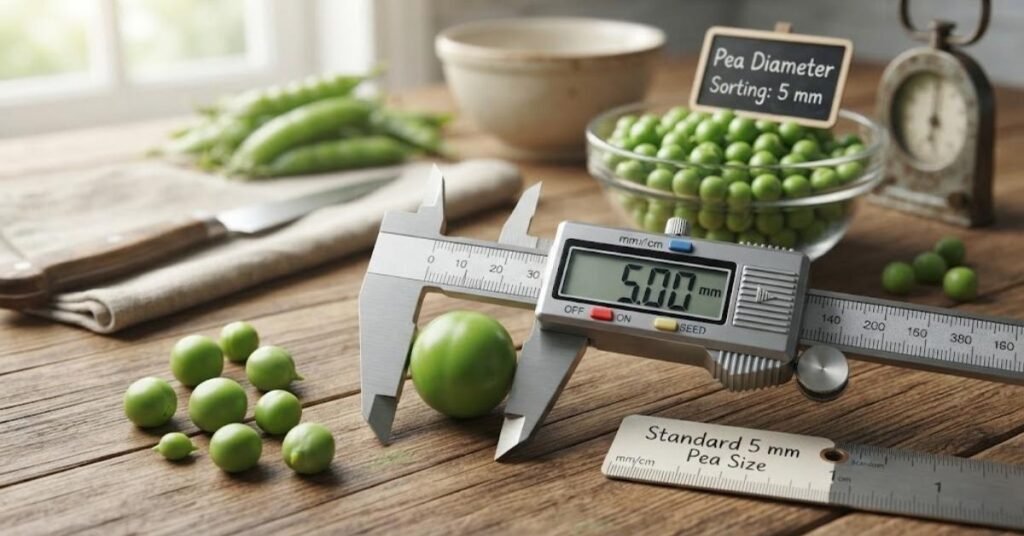
A fresh green pea straight from the pod usually measures close to 5mm across. Next time you’re prepping vegetables for dinner, take a second to notice this.
This is one of the most relatable 5mm examples because peas show up in kitchens everywhere. Grocery store produce sections practically hand you a free size reference tool.
If you garden, you already know peas vary a little by variety. Still, the average diameter stays remarkably close to this mark, making it a reliable go-to comparison.
2. Pencil Eraser Width
The classic pink eraser at the end of a pencil typically measures around 5mm wide. It’s one of the most accessible school materials for a quick visual comparison.
Grab any standard pencil from your desk drawer right now. Look at the eraser’s width and you’re basically holding a 5mm ruler substitute.
This comparison works great for kids learning measurement conversion at school. It turns a boring math lesson into something they can literally hold in their hand.
3. Small Craft Bead
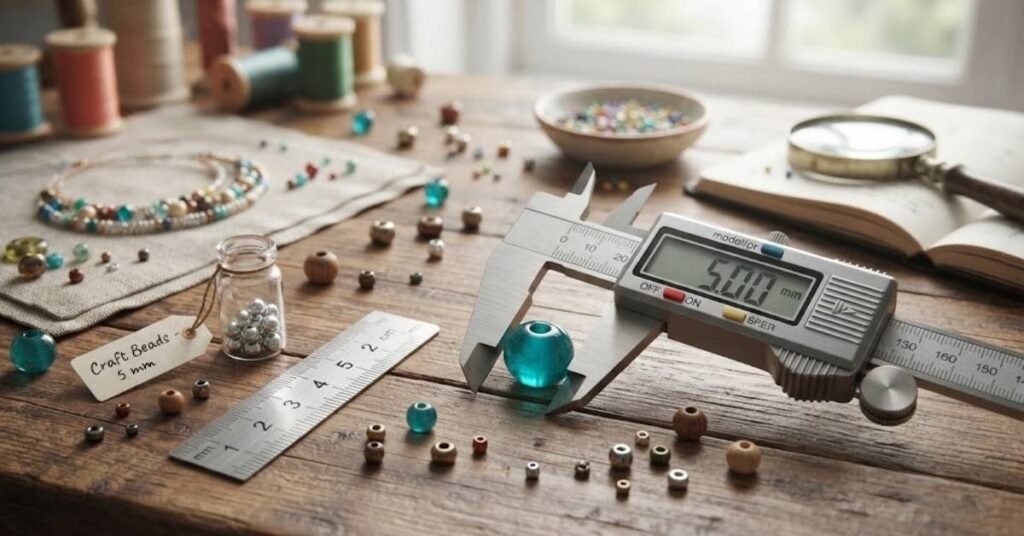
If you’ve ever done DIY jewelry or handmade crafts, you’ve probably handled beads this exact size. A small craft bead used in bracelets or necklaces often measures 5mm.
Jewelry supplies stores actually list bead sizes by the millimeter, which makes this comparison doubly useful. Next time you’re shopping for jewelry beads, you’ll instantly know what to expect.
This size hits a sweet spot for DIY projects. Small enough to look delicate, large enough to string easily without frustrating your fingers.
4. Headphone Jack Opening
The little metal opening on a pair of wired headphones, the port where the plug slides in, measures close to 5mm across. It’s a small but important detail in audio equipment design.
This matters more than you’d think for device compatibility. Connectors and adapters need to match this dimension precisely, or your headphones simply won’t fit.
Next time a cable doesn’t seat properly, check the electronic accessories aisle for the right size match. Precision at this scale genuinely affects whether your technology works as expected.
5. Tiny Button Width
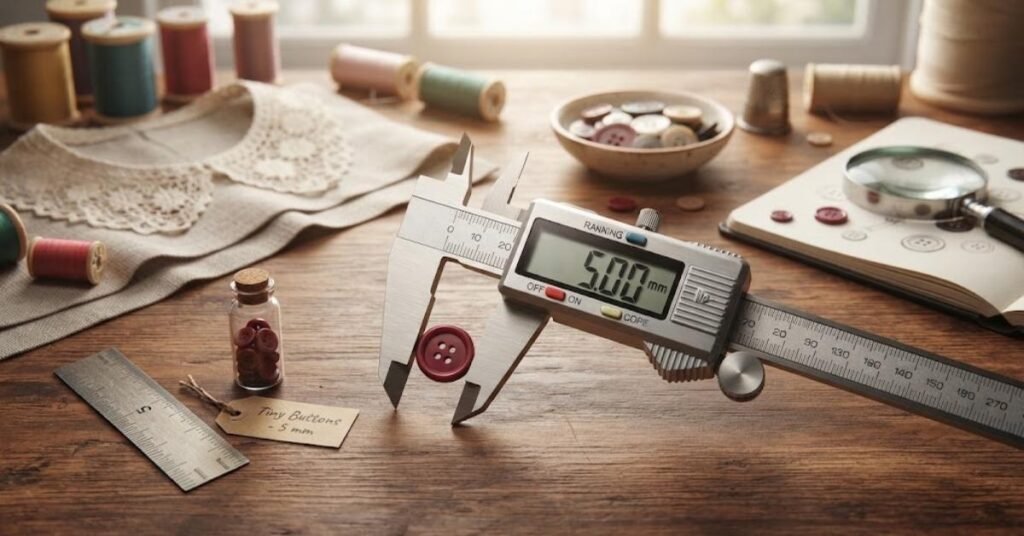
A tiny button used on doll clothing or delicate fabric items often sits right at 5mm. These are common in sewing projects that need fastening fabric without bulk.
Craft button suppliers list this exact size for miniature garments and decorative touches. If you sew, you’ve probably fumbled with one of these tiny fasteners before.
They’re fiddly to work with, sure, but that small size is exactly what makes them useful. Bigger buttons would overwhelm delicate fabric or small-scale decorative craft work.
6. Thick Cable Width
Not every cable is skinny. A thick cable, like a heavy-duty charging cable or short extension wire, can measure around 5mm in outer width.
This matters for anyone shopping for replacement electronic wire or checking if a cable fits through a tight space. Cable thickness varies a lot, and knowing this benchmark helps.
If you’re comparing product sizing for cords online, this reference saves a return trip. Nobody wants to order a cable that turns out too thick for their setup.
7. Small Marble Size
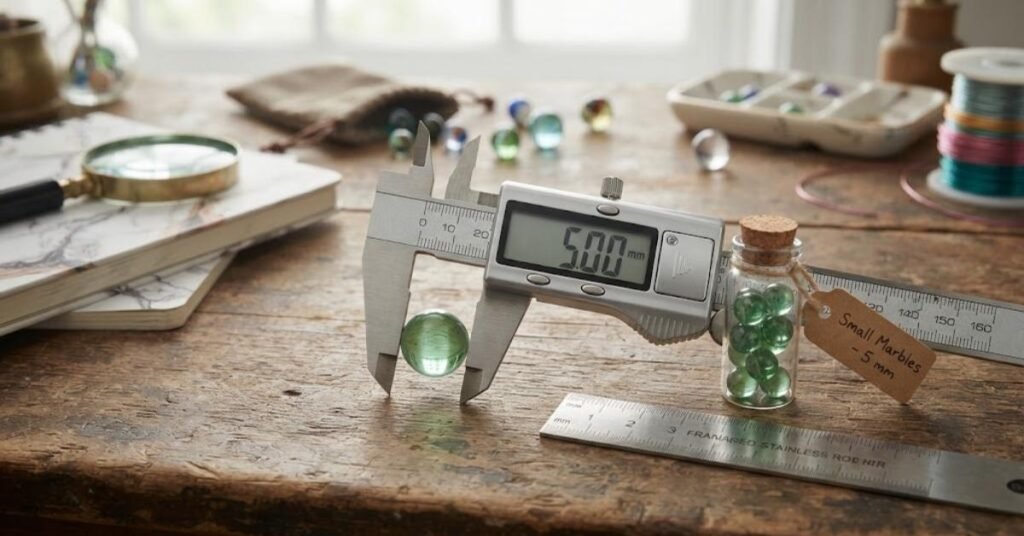
Ever played with a toy marble as a kid? Some of the smallest ones in a mixed bag measure close to 5mm in diameter.
These small marble pieces are common in games, decorative jars, and even some craft projects. Their glass construction gives them a smooth surface and satisfying weight for their tiny frame.
Marble collectors often sort pieces by size, and this measurement marks the lower end of typical ranges. It’s a fun, nostalgic way to picture 5mm in your mind.
8. Watch Crown Width
The small knob on the side of a watch, used for time adjustment and date adjustment, often measures about 5mm wide. This is called the watch crown, and it’s a critical piece of watchmaking.
Watch parts at this scale demand serious precision design. Too big, and the crown looks clunky against a slim case. Too small, and it becomes impossible to grip.
If you’ve ever struggled to set the time on a dress watch, blame the crown’s compact size. It’s a deliberate trade-off between style and usability.
9. Coarse Gravel Piece
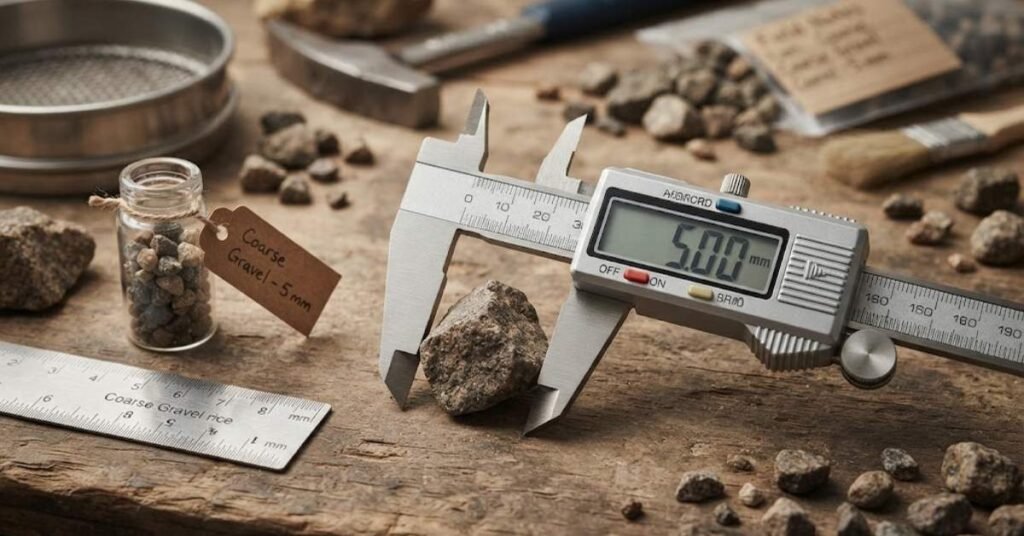
Step outside and look at your driveway or garden path. A coarse gravel piece or small stone used in landscaping often measures around 5mm across.
This size works well for drainage and texture in outdoor spaces. Landscapers pick this range because it’s large enough to stay put, yet small enough to pack tightly.
Next time you’re walking a gravel path, glance down at the individual pieces. You’re looking at a real-world example of 5mm scattered right under your feet.
Where Else You’ll Spot 5mm (Bonus Examples)
Beyond the nine main items, a few more common objects deserve a mention. Sand grains on the coarser end of the scale often approach 5mm, especially near rocky shorelines.
Small screws and drill bits used in furniture assembly frequently come in this size too. If you’ve ever rebuilt a bookshelf, you’ve likely handled hardware parts this exact width.
Decorative rock pieces used in potted plants or aquariums also tend to land here. It’s a size that shows up far more often than most people realize, once you start paying attention.
Why Knowing This Size Matters for Shopping
Understanding 5mm isn’t just trivia, it actually saves you money and hassle. Online shopping relies heavily on listed dimensions, and a wrong guess means a wrong order.
Whether you’re buying products online for jewelry shopping, watch shopping, or grabbing replacement parts for electronics, knowing this scale helps you avoid returns. Product comparison gets a lot easier once you have a mental anchor point.
Next time a listing feels vague, pull up this guide. A little measurement accuracy upfront beats a disappointing unboxing later.
Common Mistakes People Make When Estimating 5mm
Even with good visual reference tools, people mess this up more than you’d expect. Confusing 2mm or 3mm with 5mm is the most frequent slip, since the gap looks tiny at a glance but matters a lot for precision work.
Another common mix-up happens when people eyeball thickness instead of diameter, or vice versa. A thick cable might be 5mm across but far longer in other dimensions, so context always matters when checking product dimensions.
Rushing the comparison is the real culprit behind most errors. Slow down, grab a familiar item like a shirt button or credit card, and actually line it up before trusting your eye. That extra ten seconds saves a lot of accurate sizing headaches later.
How 5mm Shows Up Across Different Industries
Precision at this scale isn’t limited to crafts and jewelry. Engineering teams designing small hardware components, from screws to connector pins, work within tight millimeter accuracy tolerances every single day.
In construction, gravel and sand grains at this size affect drainage performance and surface texture underfoot. Get the grading wrong, and pathways either shift underfoot or clog up drainage channels entirely.
Even watchmaking treats this size as a serious engineering challenge. A watch crown built with sloppy tolerances either jams or falls out entirely, which shows just how much functionality rides on a few millimeters of precision design.
FAQs
How big is 5mm in inches?
5mm converts to about 0.197 inches, just under a quarter inch. It’s a small but noticeable width once you compare it side by side with a ruler.
What common object is 5mm big?
A green pea, a pencil eraser, or a small craft bead are solid 5mm examples. All three are familiar items you likely already have within reach.
Is 5mm easy to see?
Yes, 5mm is easily visible to the naked eye. It’s small, but it’s not microscopic, so you won’t need a magnifier to spot it.
What does 5mm look like?
Think of the width of a pencil eraser or a toy marble. What does 5mm look like in practice comes down to these kinds of everyday objects you already recognize.
How can I estimate 5mm without a ruler?
Compare it to your fingernail corner, two stacked credit cards, or a shirt button. These body reference and everyday comparison tricks work well without any tools.
Conclusion
5mm might seem like a tiny, forgettable number, but it shows up constantly once you know where to look. From a green pea in your dinner to the watch crown on your wrist, this size quietly surrounds you every day.
Next time you spot a measurement on a product page, you won’t need to guess anymore. You’ve got nine solid real-life examples, a few estimation tricks, and a handy conversion chart to back you up.

James Walker is a content writer and researcher with a passion for making everyday information simple, useful, and easy to understand. He enjoys researching measurements, dimensions, size comparisons, and interesting facts and turning them into clear, engaging content for readers.
Through his work at HipeDigest, James focuses on providing informative and reader-friendly articles that combine accuracy, simplicity, and practical examples. His goal is to help readers discover useful information while making every topic enjoyable and easy to explore.
