

Ever squinted at a product listing that says “3mm” and had zero clue what that actually means?
You’re not alone.
Millimeter measurement feels invisible until you need it, then suddenly it’s everywhere. A jewelry bead. A screw for your glasses. A crack in your phone case that’s letting dust in.
This guide breaks down exactly how big 3mm is, using stuff you already have lying around the house. No ruler required, though we’ll show you how to grab one if you want to double check.
How Big Is 3mm?
Three millimeters is tiny. We’re talking 0.3 centimeters, or 0.118 inches if you think in the imperial system.
Picture a grain of rice cut into thirds. That middle sliver? That’s roughly your 3 millimeters. It’s small enough to lose in a couch cushion but big enough to matter when you’re building furniture, threading a bracelet, or fixing a laptop hinge.
In the metric system, a millimeter is one thousandth of a meter, so 3mm works out to 0.003 meters. Doesn’t sound like much on paper. But hold a coin up to your eye and you’ll realize how much detail actually fits into that tiny length measurement.
How to Estimate 3mm Without a Ruler
You don’t always have a measuring tool in your pocket. Sometimes you’re standing in a hardware store aisle trying to guess if a tiny screw will fit your glasses frame. Here’s how to eyeball it fast.
Your body and your wallet already carry built in reference points. Once you know them, you’ll never be stuck guessing again.
Using Your Fingernail
Look at the white tip of your fingernail, the part that grows past your finger.
That little edge is usually close to 3mm thick. It’s a genuinely handy fingernail comparison trick, especially when you’re out shopping and left your tape measure at home.
Using Coins or Cards
Credit cards are a surprisingly reliable size reference. A single card runs about 0.76mm thick, so three stacked credit cards land you almost exactly at 3mm.
Coins work too. The edge of a US dime, viewed from the side, gives you a rough fingertip comparison point that’s close enough for quick decisions.
Using Everyday Objects
Beyond fingernails and cards, plenty of common objects double as measuring aids. A phone charging port opening, a shirt button’s edge, even the gap in a stapler.
Once you start looking, you’ll notice quick estimate opportunities everywhere. It becomes second nature after a week or two of paying attention.
Quick Comparison Table
Numbers stick better with a visual. Here’s a fast conversion chart so you’re not doing math in your head mid shopping trip.
| Unit | Value |
| Millimeters | 3mm |
| Centimeters | 0.3 cm |
| Meters | 0.003 m |
| Inches | 0.118 in |
| Feet | 0.01 ft |
Keep this table bookmarked. It’s the kind of unit conversion cheat sheet that saves you a Google search every single time.
1. Black Peppercorn
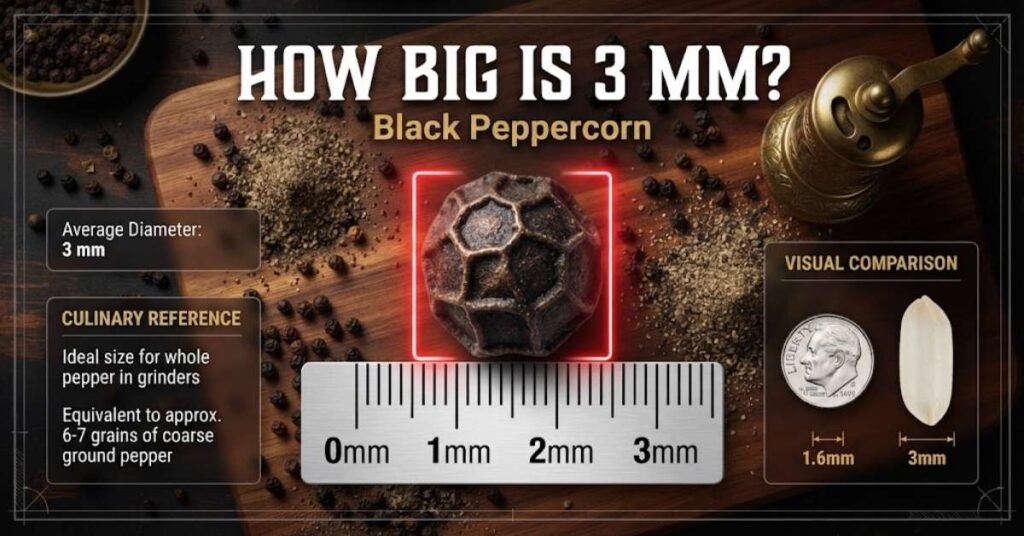
Grab a jar of whole peppercorns from your spice rack and take a look.
A single black peppercorn measures right around 3mm across, sometimes a touch more depending on the batch. It’s one of the most relatable real-life measurement examples because nearly every kitchen has a pepper grinder sitting somewhere.
Next time you’re grinding pepper over dinner, notice how small each kitchen ingredient actually is before it gets crushed. That tiny sphere packs a surprising punch, both in flavor and as a visual reference for this exact measurement.
2. Small Jewelry Bead
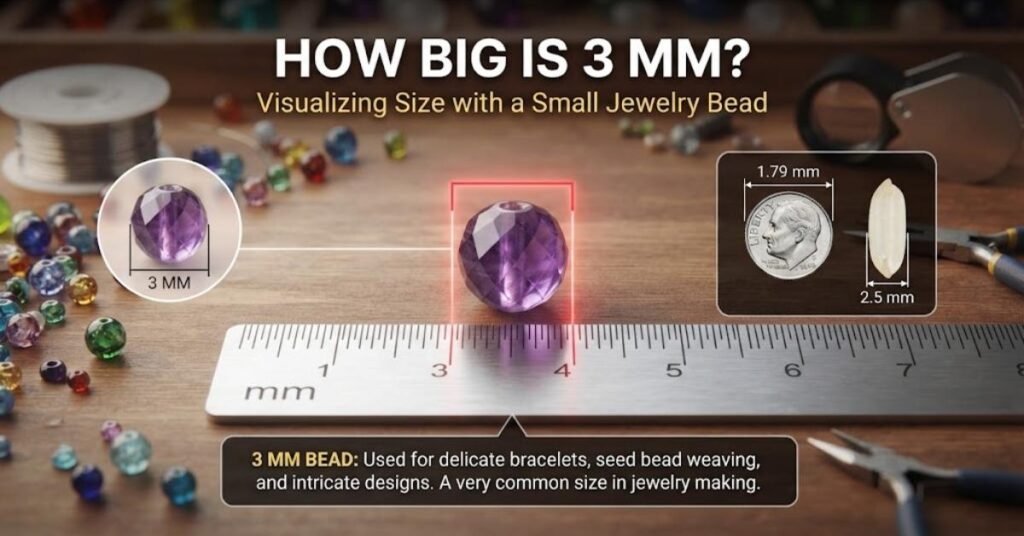
If you’ve ever tried jewelry making, you already know beads come in wildly different sizes.
A small jewelry bead, the kind used for delicate necklaces and dainty bracelets, typically sits around 3mm in diameter. Bead sellers list this size constantly because it’s the sweet spot between visible and subtle for fine craft projects.
Threading beads this small takes patience, honestly. A friend of mine spent an entire weekend restringing a bracelet with 3mm beads and swore she’d never do it again, then did it again the following month anyway.
3. Thick Pencil Tip
Sharpen a drawing pencil and look closely at the exposed graphite.
A thick pencil tip, especially on pencils meant for bold sketching, measures close to 3mm across. Artists doing shading or dark lines often prefer this width because it lays down pigment faster than a thin, precise point.
Compare it to a mechanical pencil’s 0.5mm lead and the difference jumps out immediately. That graphite measurement gap explains why sketching pencils feel so different in your hand during actual design work.
4. Tiny Screw Width
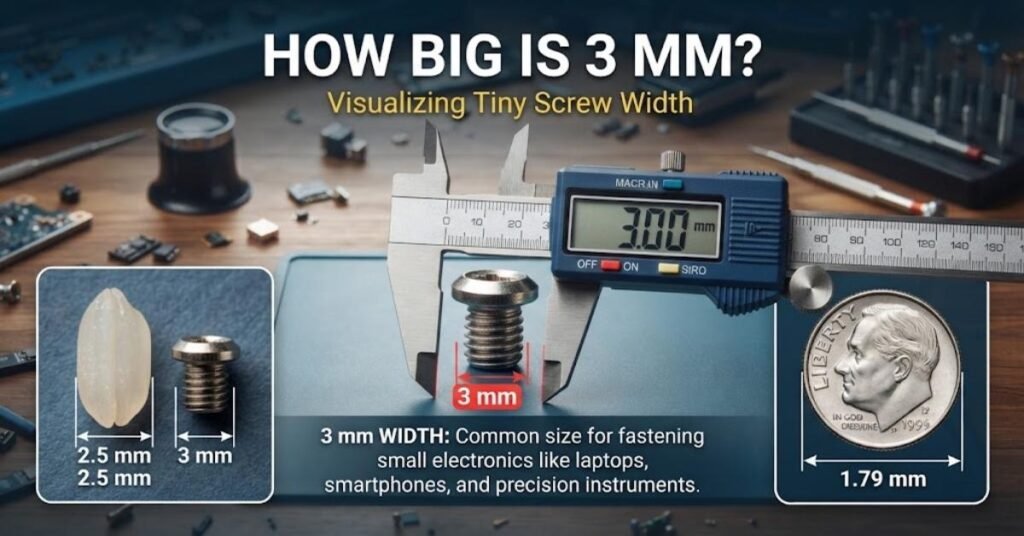
Ever opened up a laptop and found a screw so small you needed tweezers just to hold it?
That’s screw width territory around 3mm, common in electronics repair for phones, laptops, and glasses hinges. These tiny components hold entire devices together, which is wild considering how easy they are to lose in carpet fibers.
If you’re doing precision work on device components, a good precision screwdriver kit is non negotiable. Losing one 3mm screw can mean an entire afternoon crawling around your desk with a flashlight.
5. Small Seed Bead
Different from jewelry beads, a seed bead is the tiny round glass bead used in intricate beadwork and embroidery.
Many craft bead varieties labeled “size 6” measure close to 3mm, making them a staple for decorative designs on clothing, bags, and accessories. Crafters love this size because it strikes a balance between detail and speed when working on larger patterns.
If you’ve seen elaborate beaded patches on jackets or handbags, there’s a good chance decorative bead work at this exact scale is behind it. It takes hundreds of tiny beads to fill even a small design, so patience really is the main tool here.
6. Earbud Cable Thickness
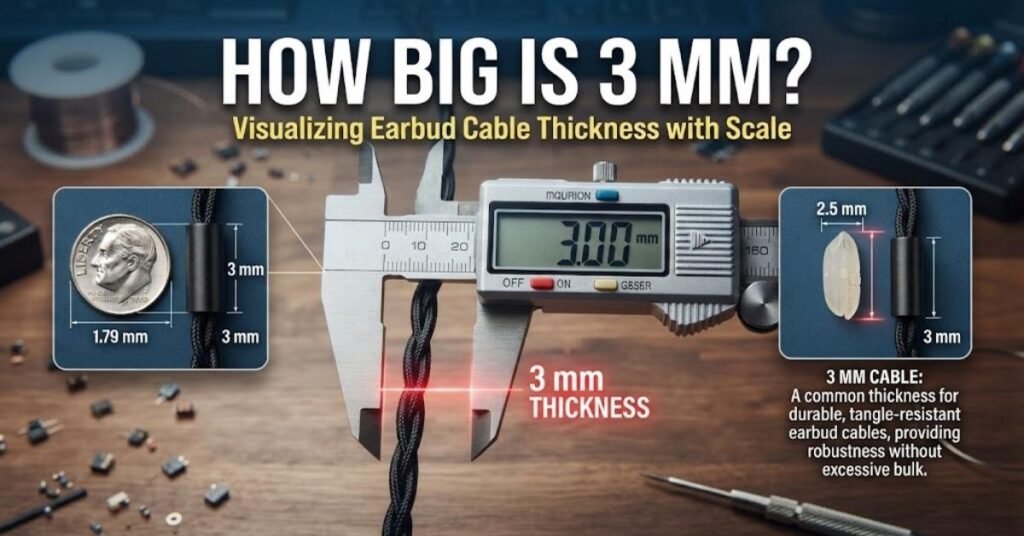
Pull out a pair of wired earphones and look at the cable itself.
Standard earbud cable thickness often lands near 3mm, giving enough flexibility for movement while still protecting the wires inside. This cable thickness balance matters more than people realize, since a cable too thin snaps easily and one too thick feels stiff and annoying.
Manufacturers spend real time testing this exact measurement for product durability. It’s part of why some cheap charging accessories feel flimsy while premium ones survive years of being shoved into bags.
7. Coarse Salt Crystal
Not all salt looks the same, and coarse varieties prove that point clearly.
A coarse salt crystal, the kind you’d find in a salt grinder or sprinkled over a steak, often measures close to 3mm per crystal. Compare that to fine table salt, which is a fraction of that size, and you’ll understand why texture changes so much between the two.
This salt crystal size difference isn’t just visual either. Larger crystals dissolve slower, which is exactly why chefs choose coarse salt for finishing dishes right before serving.
8. Thin Plastic Sheet
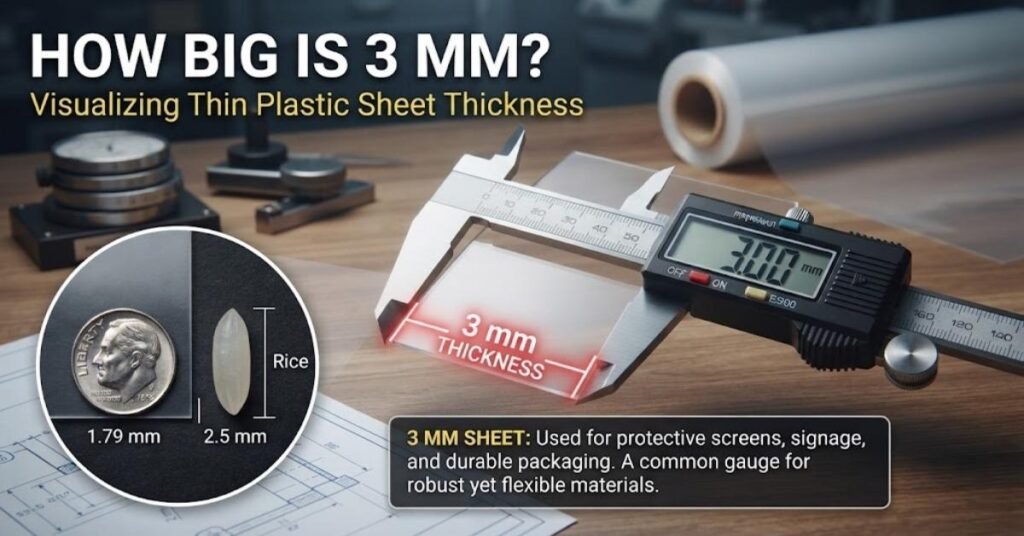
Plastic sheeting shows up everywhere, from packaging to protective covers, and thickness varies enormously.
A thin plastic sheet measuring 3mm feels sturdy in your hands, more like a rigid panel than a flimsy wrap. This plastic thickness is common in signage, display cases, and lightweight protective barriers you’d see in stores or offices.
Compare it to plastic wrap, which measures a fraction of a millimeter, and the jump in rigidity makes total sense. That extra plastic material thickness is the difference between something that bends and something that holds its shape.
9. Watch Screw Head
Inside a mechanical watch, everything runs on tiny, exact mechanical parts.
A watch screw head frequently measures around 3mm, holding delicate watch parts in place with barely any room for error. Watch repair specialists rely on a magnifying lens just to see these components clearly, let alone work on them.
This level of precision work is why watch repair costs what it does. One wrong twist on a screw this small and you risk damaging an accurate movement that took a craftsman hours to assemble.
Where Else 3mm Shows Up
Beyond the nine examples above, this small measurement pops up in places people rarely think about.
Phone screen protectors often list their edge thickness near 3mm for that reinforced, drop resistant feel. Furniture assembly hardware, like the dowels connecting bookshelf panels, frequently falls into this same range too.
Even fabric and stitching work uses 3mm as a reference point. A common straight stitch length in sewing machines sits right around here, giving fabric a clean, professional finish without looking too loose or too tight.
Why Getting This Measurement Right Actually Matters
Guessing wrong on object size isn’t just annoying, it can cost you time and money.
Order the wrong bead size for a necklace and your whole design falls apart, literally. Buy the wrong replacement screw for your glasses and you’re stuck waiting days for a return label instead of just wearing your glasses.
This is exactly why online shopping platforms have started adding size comparison images next to product listings. Customers kept messaging support asking “how big is this really,” so brands finally started showing scale next to everyday objects like coins and fingertips.
FAQs
How big is 3mm in inches?
3mm converts to 0.118 inches, just under one eighth of an inch. If you’re using a standard ruler, it sits just past the smallest tick marks near the very edge.
What common object is 3mm big?
A black peppercorn is one of the easiest 3mm examples to picture, since almost everyone has seen one up close. Small jewelry beads and watch screw heads are also reliable go to references.
Is 3mm easy to see?
Yes, though it requires focused attention rather than a passing glance. Most people can spot a 3mm object clearly at arm’s length, but fine details on it, like text or texture, get harder to make out.
What does 3mm look like?
It looks like the thickness of three stacked credit cards or the width of a coarse salt crystal. Think small, precise, and easy to lose if you’re not careful with it.
How can I estimate 3mm without a ruler?
Use your fingernail tip, stack a few cards together, or compare it against a peppercorn from your spice rack. These approximate measurement tricks work well for quick, casual estimates when a measuring tool isn’t handy.
Conclusion
Three millimeters might seem like nothing on paper, but it shows up constantly once you start paying attention.
From the peppercorn size in your spice rack to the watch parts ticking away on your wrist, this tiny physical dimensions benchmark quietly shapes everyday objects around you. Next time a product listing throws a millimeter figure at you, you’ll have a real, tangible sense of what that number actually means.

James Walker is a content writer and researcher with a passion for making everyday information simple, useful, and easy to understand. He enjoys researching measurements, dimensions, size comparisons, and interesting facts and turning them into clear, engaging content for readers.
Through his work at HipeDigest, James focuses on providing informative and reader-friendly articles that combine accuracy, simplicity, and practical examples. His goal is to help readers discover useful information while making every topic enjoyable and easy to explore.
