

Ever stood in a hardware store, staring at a bolt, wondering if it’s really “about an inch”?
You’re not alone.
Most of us don’t carry a ruler in our pocket. So when someone says “it’s an inch long,” we nod along and hope we’re picturing the right size.
Here’s the short answer: an inch is 2.54 centimeters, or 25.4 millimeters. That’s 0.083 feet, or roughly 0.0278 yards. It’s one of the basic building blocks of the imperial system, the unit of length Americans grew up measuring everything from screws to shoe sizes with.
But numbers on a page don’t help much when you’re trying to picture something in real life. That’s where everyday objects come in handy. Once you connect an inch to a standard paperclip or a quarter coin, you stop guessing and start knowing.
This guide walks through ten one-inch reference objects you already have lying around your house. No measuring tool required, just your eyes and a little memory.
Comparison Table: Inch vs Other Units
Before we get to the objects, let’s line up the numbers. This measurement conversion chart gives you a quick cheat sheet for converting an inch into other common units.
| Unit | Equivalent to 1 Inch |
|---|---|
| Centimeter | 2.54 cm |
| Millimeter | 25.4 mm |
| Foot | 0.083 ft |
| Yard | 0.0278 yd |
| Meter | 0.0254 m |
Keep this table bookmarked. It comes in handy for length conversion whether you’re shopping online, following a recipe, or measuring a picture frame.
The metric system and the imperial system rarely play nice together. Most of the world uses centimeters and meters. The U.S. still leans on inches and feet. Knowing both sides of this table saves you from a lot of confused head-scratching, especially if you shop from international sites.
Visual Comparison Table: What an Inch Looks Like
Numbers are one thing. Pictures in your head are another.
This visual measurement comparison table connects the abstract inch to physical things you can picture instantly. Think of it as your size comparison cheat sheet.
| Object | Approximate Size |
|---|---|
| Standard paperclip | 1 inch (width) |
| Quarter coin | 0.955 inch (close to 1 inch) |
| Thumb joint | 1 inch (tip to first knuckle) |
| Dice | 0.6 to 1 inch per side |
| Bottle cap | 1.18 inches (close to 1 inch) |
| USB flash drive connector | 0.5 inch (close to half an inch) |
| Adult finger width | 0.75 to 1 inch |
| Lego brick height | 0.36 inch (roughly a third) |
| Sewing pin head section | Under 0.25 inch |
| Small key width | Around 1 inch |
None of these are laboratory-precise. They’re approximate size markers, and that’s the whole point. You don’t need a lab. You need a fast, reliable gut check.
1. A Standard Paperclip
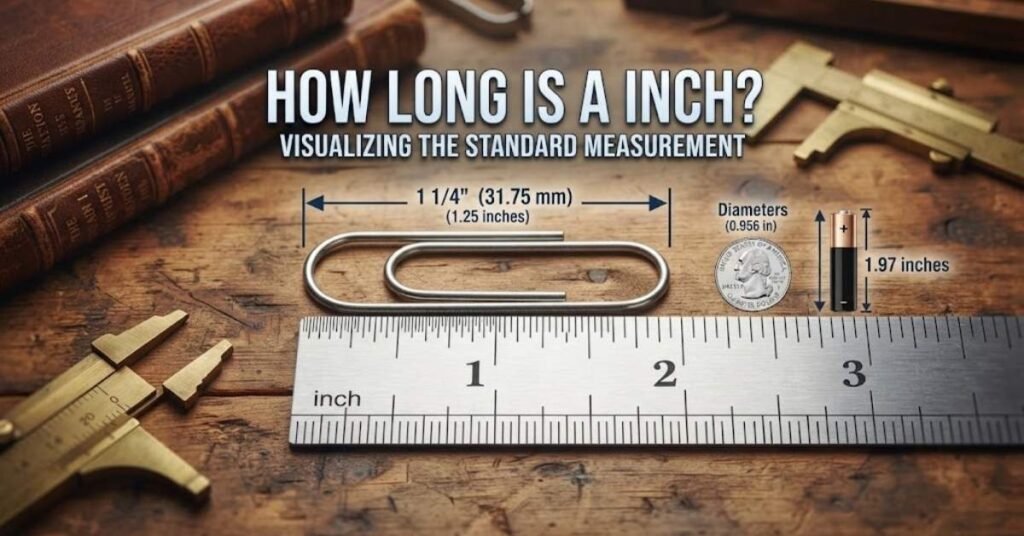
Grab a paperclip off your desk right now. Go on, we’ll wait.
The width of a standard paperclip, the classic silver kind, sits right around one inch. That’s the short measurement across the clip, not the length if you unbend it. Office supply stores have sold this same size for decades, which makes paperclip length one of the most reliable everyday measuring techniques around.
Why does this matter? Because a paperclip travels with you. It’s in your junk drawer, your car, your work bag. When you need a quick quick measurement estimate and don’t feel like hunting for a ruler, your paperclip’s got your back.
2. The Width of a Quarter Coin
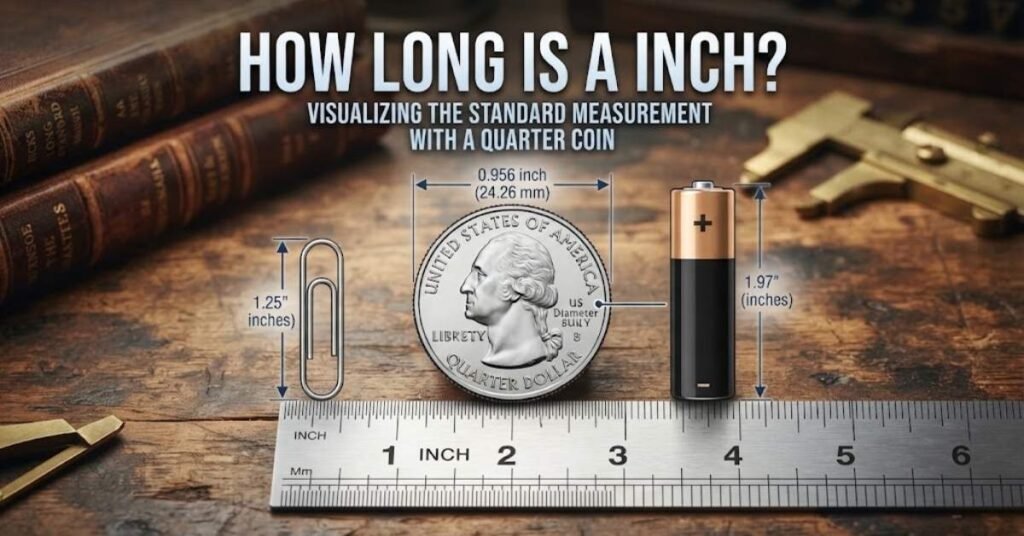
Reach into your pocket or your car’s cup holder. A quarter coin is probably in there somewhere.
The quarter coin diameter measures 0.955 inches, just a hair under a full inch. Close enough that most people round it up without thinking twice. This makes it one of the best coin measurement tricks for anyone shopping online for jewelry, phone cases, or small parts.
Ever seen a product photo with a quarter placed next to it “for scale”? That’s not an accident. Sellers know that almost everyone recognizes a quarter’s size instantly, which makes it a near-perfect stand-in for an inch.
3. The Length of a Thumb Joint
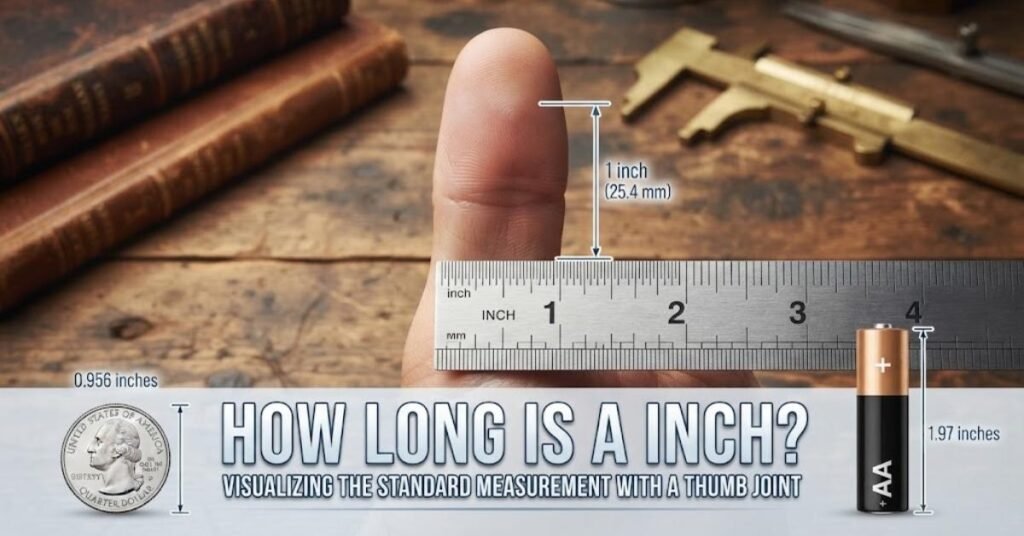
Here’s a trick your grandparents probably knew. The distance from the tip of your adult thumb joint to the first knuckle is roughly one inch.
This is a classic example of body-based measurement, using your own body as a portable ruler. It’s not exact, since hand size varies from person to person, but it’s shockingly close for most adults.
Try it. Measure your thumb against an actual ruler and see how close you land. Carpenters and tailors have leaned on this trick for generations, long before tape measures were cheap or common.
4. A Dice (One Side Length)
Board game night just got educational.
A standard six-sided dice used in most board games measures somewhere between 0.6 and 1 inch per side, depending on the set. Casino-style dice tend to run closer to that full inch mark, while smaller travel dice shrink things down.
This cube-shaped object gives you a solid 3D reference, not just a flat one. Next time you’re playing Monopoly, glance at the dice and picture that same one-inch cube stacked next to whatever you’re trying to measure.
5. The Diameter of a Bottle Cap
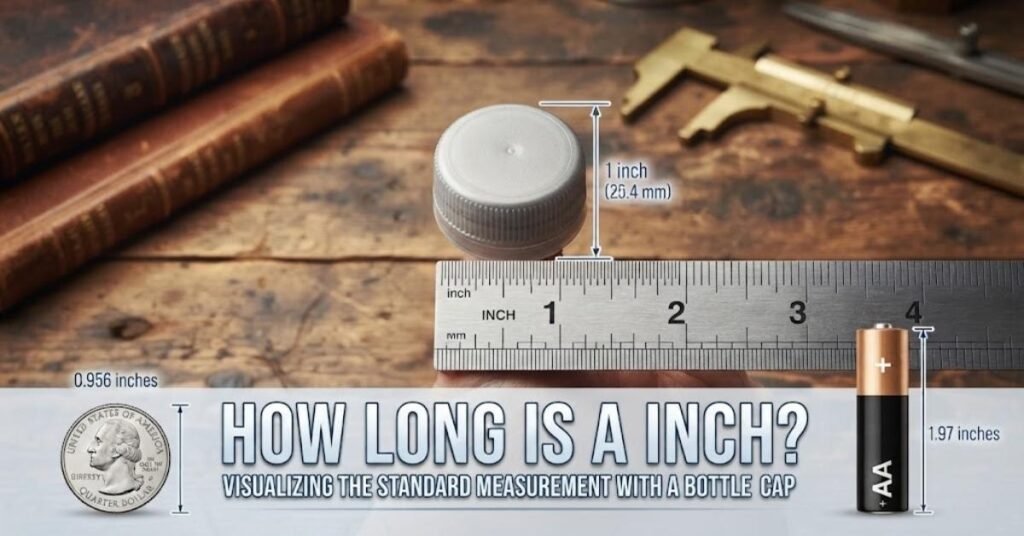
Twist open a soda bottle and take a look at the cap in your hand.
The plastic bottle cap on most standard bottles measures about 1.18 inches across. That’s a touch over an inch, but it’s close enough to use as a mental shortcut for circular measurement tasks.
Bottle cap diameter stays fairly consistent across brands, since manufacturers follow shared industry standards for bottling equipment. That consistency is exactly why it works so well as a reference.
6. A USB Flash Drive Connector
This one’s for anyone who’s ever fumbled plugging in a flash drive in the dark.
The USB Type-A connector, the metal tip on most USB flash drive sticks, measures about half an inch wide. Not a full inch, but useful as a USB connector width reference for anything roughly half that size.
Electronic accessories and computer accessories rely on standardized dimensions so they fit ports across different devices. That’s part of why technology dimensions and precision manufacturing go hand in hand. A connector that’s even slightly off won’t fit, so manufacturers keep these measurements tight.
7. The Width of an Adult Finger
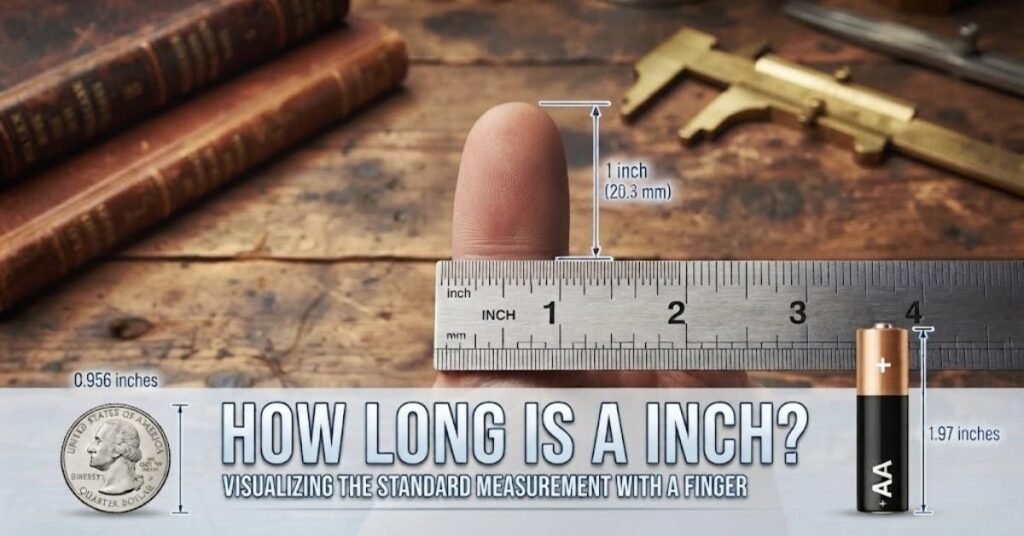
Hold up your index finger and look at it straight on.
The adult finger width, measured across the middle section, typically runs between 0.75 and 1 inch. It varies more than a thumb joint does, but it’s still a handy backup reference when your thumb isn’t cooperating.
This is another form of finger width based measurement that people have used for centuries, especially in cooking and gardening, where “an inch of ginger” or “plant seeds an inch deep” gets measured by finger rather than ruler.
8. A Lego Brick Height
If you’ve got kids, or you’re still secretly a kid at heart, you’ve got Legos somewhere in the house.
The classic 2×4 Lego brick stands about 0.36 inches tall, roughly a third of an inch. It’s smaller than a full inch, but stack three of them and you’re basically there. Lego brick height is famously consistent since Lego builds every set to the same precise mold.
Lego measurements are so standardized that bricks made in 1958 still snap together with ones made today. That kind of consistency makes them a surprisingly dependable measuring reference, even decades later.
9. The Length of a Sewing Pin Head Section
Break out the sewing kit for this one.
The pin head section of a straight pin, just the rounded top portion, measures well under a quarter inch. It’s tiny compared to a full inch, which makes it a great reference for the smaller end of the scale.
Anyone into sewing tools, fabric crafts, or DIY projects already handles these small measurements constantly. When a pattern calls for a quarter-inch seam allowance, picturing a pin head helps you eyeball it fast.
10. A Small Key Width
Last one. Check your keyring.
A small key, like a drawer key or a basic house key blade, usually measures close to one inch across the widest part. Not the whole key with the bow (the part you hold), just the blade section that slides into the lock.
House key dimensions follow loose industry norms, so most keys land in a similar size range. It’s not a perfect standard the way a USB connector is, but it’s close enough to serve as a rough guide.
Why Visual References Beat Guessing
Here’s something worth thinking about. Our brains are terrible at estimating length out of thin air. Ask ten people to guess an inch with their fingers, and you’ll get ten different answers.
But show those same ten people a paperclip, and they’ll nail it almost every time.
That’s the power of real-world measurement examples. They anchor an abstract number to something your eyes and hands already know. This isn’t just a party trick either. It’s a genuinely useful skill for online shopping measurements, where product listings often skip clear size photos and leave you guessing whether that necklace pendant is dainty or oversized.
How to Measure Without a Ruler
Sometimes you just don’t have a measuring tool handy. Maybe you’re at a friend’s house, or you left your tape measure in the garage again.
Measuring without a ruler comes down to using standardized dimensions you already know. Here’s a quick rundown of reliable go-to references:
- One inch: paperclip width, quarter coin, thumb joint
- Two inches: two stacked quarters, a golf tee
- Six inches: a standard smartphone (roughly)
- One foot: a standard sheet of paper’s short side
Once you build a mental library of these home measurement shortcuts, you’ll find yourself reaching for a ruler far less often. It’s not about precise measurement every single time. It’s about measurement accuracy that’s good enough for the task in front of you.
Practical Uses for Inch-Based Estimation
So when does this actually matter in real life? More often than you’d think.
Construction measurements frequently call for quick inch-based checks before you commit to cutting a board or drilling a hole. Craft projects lean on the same skill, especially when you’re mid-project and don’t want to stop and hunt for a tape measure. Even online shopping measurements benefit, since picturing “3 inches” as three stacked quarters tells you more than the number alone ever could.
Practical measurement skills like these aren’t about replacing your ruler. They’re about backing it up. When you’re standing in an aisle deciding if a phone case will fit, or texting a friend to ask how big something is, these mental shortcuts save time and prevent returns.
Frequently Asked Questions
How long is an inch compared to a centimeter?
An inch equals 2.54 centimeters. So one inch is always longer than one centimeter, roughly two and a half times longer.
What everyday object is exactly one inch?
A standard paperclip’s width comes closest to a true one-inch measurement, making it one of the most reliable references around the house.
Is a quarter exactly one inch wide?
Not quite. A U.S. quarter measures 0.955 inches across, just shy of a full inch, but close enough for quick visual estimates.
How can I measure an inch without a ruler?
Use your thumb joint, a paperclip, or a quarter coin. All three land close to one inch and are usually within arm’s reach.
Why does the U.S. still use inches instead of centimeters?
The U.S. customary units system, built on imperial measurements, has deep historical roots in trade, construction, and manufacturing. Switching fully to the metric system would require overhauling tools, road signs, and industry standards, so the shift has never fully happened.
Final Thoughts
An inch might seem like a small, unremarkable unit. But once you connect it to real objects, a paperclip, a quarter, a thumb joint, it stops being an abstract number and starts being something you can picture instantly.
Inch visualization isn’t about memorizing conversion charts, though those help too. It’s about training your eyes to recognize size the way you already recognize color or shape. Next time someone asks how long something is, you won’t have to guess. You’ll just know.
Keep this list handy, whether it’s bookmarked or tucked away in memory. The next time you need a quick measurement estimate, you’ve got ten reliable references sitting in your junk drawer, your pocket, or your desk right now.

James Walker is a content writer and researcher with a passion for making everyday information simple, useful, and easy to understand. He enjoys researching measurements, dimensions, size comparisons, and interesting facts and turning them into clear, engaging content for readers.
Through his work at HipeDigest, James focuses on providing informative and reader-friendly articles that combine accuracy, simplicity, and practical examples. His goal is to help readers discover useful information while making every topic enjoyable and easy to explore.
