

30 cm equals 11.81 inches, or just under 12 inches if you’re rounding for everyday use. That’s the short answer, so if you’re mid Google search and need the number fast, there it is.
But numbers on a screen don’t always click. You need something to hold that size in your head. So this guide covers the full conversion, the math behind it, and twelve real objects that sit right around 30 cm, so the size actually sticks with you.
30 cm: Every Conversion You Actually Need
Let’s get the full measurement conversion out of the way first. 30 centimeters breaks down like this across every unit people search for.
- 30 cm in inches: 11.81 inches
- 30 cm in feet: 0.984 feet (basically one foot)
- 30 cm in meters: 0.3 meters
- 30 cm in millimeters: 300 millimeters (mm)
- 30 cm in yards: 0.328 yards (yd)
That 0.984 feet figure is the fun one. It’s so close to one foot that most people just round it up and call it a day. When someone says “about a foot long,” there’s a decent chance they’re eyeballing something close to 30 cm without even knowing it.
Why 30 cm Keeps Showing Up Everywhere
Here’s the thing about 30 cm: it’s not a random number. It sits at a sweet spot between the metric system and the imperial system, which is exactly why manufacturers love it. A lot of product dimensions land near 30 cm because it converts cleanly enough to work for markets using either system.
Walk through Europe or Asia and you’ll notice 30 cm pop up constantly in manufacturers‘ metric standards, whether that’s tile sizing, furniture width, or shipping box dimensions. It’s a size that just works, both to produce and to ship.
That’s also why it shows up so often in size charts and product listings online. If you shop internationally, you’ve probably seen “30 cm” written next to something and had zero clue what that meant in real life. That’s what the next section fixes.
12 Everyday Things That Are Right Around 30 cm
Numbers are abstract. Objects aren’t. Here are twelve things you’ve probably touched, seen, or owned that sit close to 30 cm, so you can use them as a size comparison anytime you need one.
1. A Medium Pizza
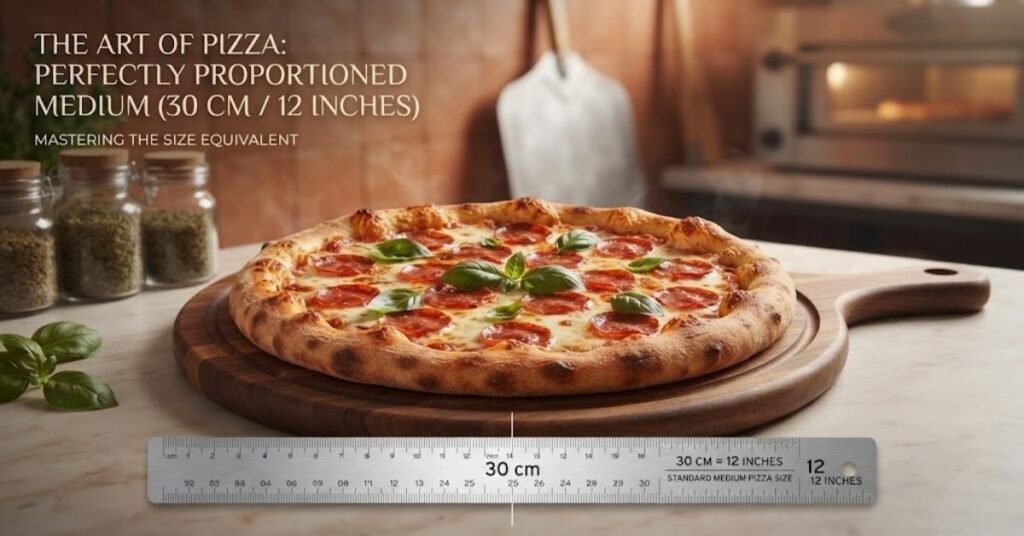
A medium pizza typically measures around 30 cm across, or roughly 12 inches. Next time your pizza box arrives, that’s your real-life size reference sitting right there on the kitchen counter.
Pizza diameter varies by chain, but medium sizes consistently hover near this mark. It’s one of the easiest everyday objects to picture, since almost everyone has ordered one.
2. A Standard Plant Pot (Medium Size)
A 30 cm diameter plant pot is a common size at any garden center. If you’ve bought a planter for a houseplant like a monstera or a small citrus tree, there’s a solid chance it measured close to this.
Gardeners use this size constantly because it gives roots enough room without taking over a windowsill or patio corner. It’s a genuinely practical size for both indoor and outdoor growing.
3. A Vinyl Record (LP)
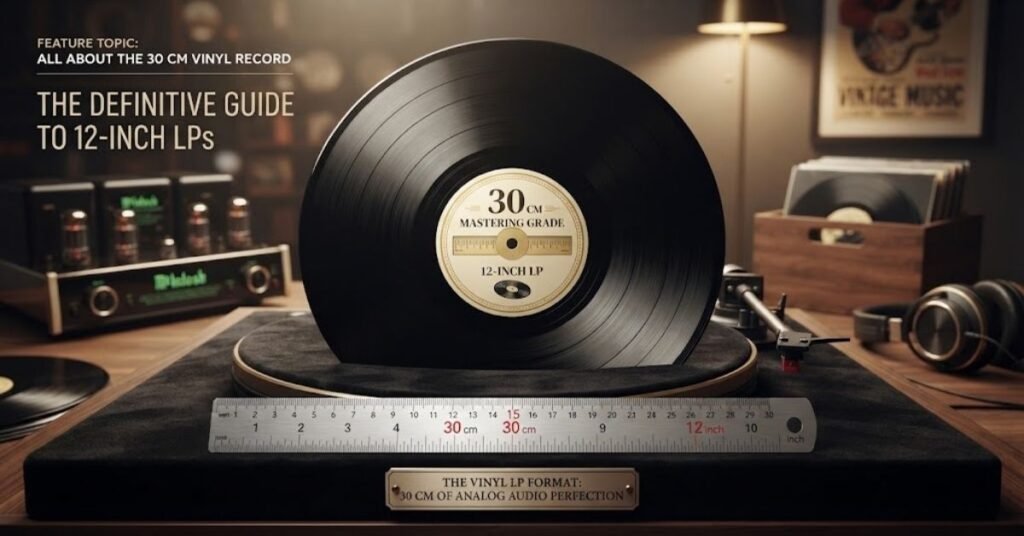
A classic 12-inch record, also called an LP record, measures almost exactly 30 cm across. The paper label in the center doesn’t count toward that measurement, just the vinyl disc itself.
If you’ve ever flipped through a music record collection, you’ve held this size dozens of times without thinking about it. It’s one of the most precise real-world matches on this entire list.
4. A Round Side Table
Browse any furniture store and you’ll spot round side table options sized right around 30 cm across the top. IKEA and similar retailers use this standard size often for small tables meant to sit beside a sofa or serve as a bedside table.
It’s compact enough for a small apartment, yet wide enough to hold a lamp, a book, and a coffee mug comfortably. That balance is exactly why 30 cm works so well for this kind of furniture.
5. A Guitar Neck (Full Length from Nut to Body)
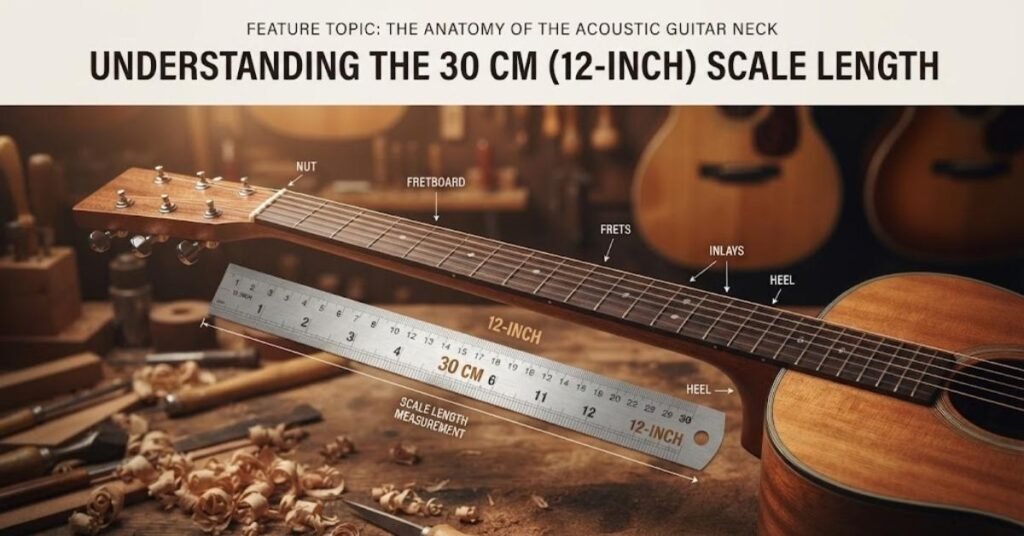
Measure a guitar neck from the nut down to where it meets the guitar body, and you’ll land close to 30 cm on many acoustic guitar and electric guitar models. It’s not exact across every brand, but it’s a solid ballpark.
Musicians rarely think about this in centimeters, but it’s a handy reference if you’re comparing instrument dimensions or shopping for a case that fits properly.
6. A Standard Floor Tile
A 30 × 30 cm tile is one of the most common sizes used across bathroom tiles, kitchen tiles, and entryway flooring. Any interior designer or tiler will recognize this size instantly since it’s a go-to in the construction industry.
It tiles evenly across most room layouts without excessive cutting, which saves both material and labor. That practicality is exactly why it became a default choice for so many contractors.
7. A Newborn Baby’s Length at Birth (Roughly Half)
This one’s a bit different. A newborn baby‘s full birth length is usually closer to 50 cm, but the distance from head to ribcage often measures around 30 cm.
It’s a strange but genuinely useful reference for new parents trying to picture proportions, or for anyone shopping for baby gear sized by upper body length.
8. A Standard PVC Pipe Section (Common Cut Length)
In plumbing and DIY projects, a PVC pipe section is frequently cut to around 30 cm for pipe fittings, drainage system work, or irrigation system setups. Hardware stores often stock pre-cut lengths near this size for convenience.
If you’ve ever stood in a hardware store aisle staring at pipe sections, this is likely one of the standard precision cuts you walked past.
9. A Typical Skateboard Deck Width (Times Two)
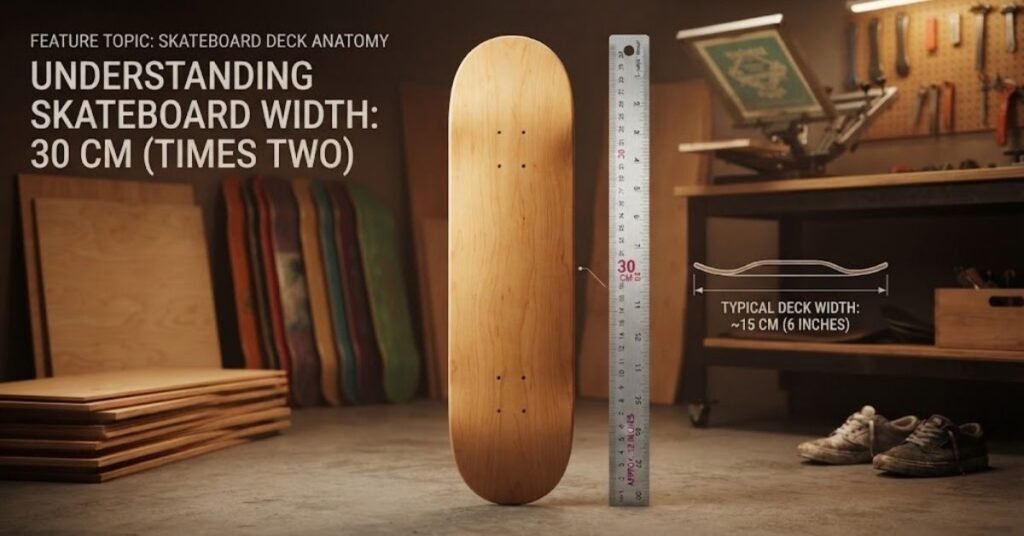
A skateboard deck width usually runs around 20 cm, so doubling that gets you close to 30 to 40 cm depending on the deck. It’s not a perfect match, but skaters use width specs constantly when picking a deck that fits their riding style.
This comparison works best as a rough mental anchor rather than an exact one, but it still helps when you’re trying to visualize the range.
10. A Large Dinner Candle Holder (Plate Style)
A decorative tray style dinner candle holder, the kind used as a centerpiece on a dining table, often measures close to 30 cm across. It’s a popular size because it fits comfortably in the middle of most tables without overwhelming the setup.
If you’ve hosted a dinner party, you’ve probably arranged one of these without ever checking its actual size in centimeters.
11. A Standard Badminton Racket Handle
The badminton racket handle and shaft combined often measure near 30 cm, particularly on models popular across South Asia and Southeast Asia where the sport is huge. The racket grip itself is shorter, but the handle-to-shaft stretch lands close to this figure.
Players rarely measure this consciously, but it’s a useful comparison if you’re trying to picture racket proportions.
12. A Standard Bathroom Faucet Spout Reach
A standard bathroom faucet spout reach, from the base of the faucet assembly to the tip, commonly measures close to 30 cm on many vanity setups. It’s a detail plumbers and home improvement shoppers check constantly when confirming fit before installation.
Next time you’re at the sink, take a glance. There’s a decent chance you’re looking at almost exactly 30 cm without realizing it.
30 cm in Inches and Feet: Quick Math Reference
If you want the actual math instead of just the answer, here’s how the inch-to-centimeter conversion works. One inch equals 2.54 cm, so dividing 30 by 2.54 gives you 11.81 inches.
For centimeter-to-inch conversion going the other way, multiply inches by 2.54. So 12 inches times 2.54 equals 30.48 cm, which is why 30 cm and 12 inches are close but not identical.
Here’s a quick reference table for anyone doing repeated conversions:
| Centimeters | Inches | Feet |
| 30 cm | 11.81 in | 0.984 ft |
| 60 cm | 23.62 in | 1.968 ft |
| 90 cm | 35.43 in | 2.953 ft |
Keep this conversion chart bookmarked if you deal with measurement conversions often, especially for online shopping where product listings rarely match your local measuring tape.
30cm Diameter: What That Actually Means
When something is listed with a 30cm diameter, that measurement runs straight across the widest point of a circle or circular object, passing through the center. It’s different from the radius, which only measures from the center to the edge, roughly 15 cm in this case.
This matters a lot for round objects like plant pots, tables, and pizzas, since the diameter tells you the true footprint the object takes up. If you’re checking whether something fits on a shelf, in a container, or on a kitchen counter, diameter is the number you actually need, not the radius.
For anyone curious about area, a 30 cm diameter circle works out to roughly 706.5 square centimeters. That’s useful if you’re calculating coverage for something like a display surface or a round lid.
Is 30 cm the Same as 12 Inches?
Not quite, though it’s close enough that people use them interchangeably in casual conversation. 30 cm equals 11.81 inches, while 12 inches equals 30.48 cm. The gap is small, less than half a centimeter, but it matters in fields where precision measurement counts, like construction materials, picture frames, or shelving with fixed slots.
For casual estimating, calling 30 cm “almost 12 inches” is perfectly fine. For precision cuts or anything requiring exact product dimensions, always use the real figure of 11.81 inches instead of rounding.
How to Estimate 30 cm Without a Ruler
Don’t have a ruler or measuring tape handy? Your own body gives a decent approximate measurement in a pinch. The distance from an adult’s elbow to wrist is usually close to 25 to 30 cm, depending on height.
A sheet of A4 paper measures 29.7 cm along its longer edge, which is about as close to 30 cm as you’ll get from something sitting in a desk drawer. Two adult hand width measurements, from knuckles to wrist, stacked together also land near this range for most people.
These tricks won’t replace actual measurement accuracy, but they’re genuinely handy for quick estimation without ruler access, whether you’re shopping, packing, or just curious.
Where 30 cm Shows Up in Tech and Screens
Beyond physical objects, 30 cm connects to digital sizing too, especially when pixels and DPI come into play. At 72 DPI, a common web resolution, 30 cm translates to roughly 850 pixels. At 96 DPI, standard for most screens, that number rises to about 1134 pixels. At 300 DPI, the resolution used for print quality, 30 cm becomes approximately 3543 pixels.
This matters if you’re designing anything meant for both display and printing, since the same physical size produces wildly different pixel counts depending on resolution. Anyone working with tech products, packaging, or print files runs into this conversion constantly.
Why This Conversion Matters for Shopping and DIY
Understanding 30 cm isn’t just trivia. It solves real problems. When you’re browsing online shopping sites and see dimensions listed in centimeters, you now have a mental anchor instead of guessing.
That matters most for storage solutions, bathroom accessories, garden supplies, or a bag you’re eyeing that lists its size only in centimeter figures. Knowing that 30 cm sits just under a foot means you can judge fit almost instantly, without pulling out a calculator every single time.
For DIY projects, this knowledge saves trips back to the hardware store. If a project calls for a 30 cm cut and your measuring tape only shows inches, you already know to aim for just under 12 inches instead of guessing and cutting twice.
FAQs
What is 30 cm equal to in inches?
30 cm equals 11.81 inches exactly, based on the standard conversion rate of 2.54 cm per inch.
Is 30 cm bigger than 1 foot?
No, 30 cm is very slightly smaller than 1 foot. One foot equals 30.48 cm, so 30 cm falls just under that mark.
How many millimeters are in 30 cm?
30 cm equals 300 millimeters, since there are 10 mm in every centimeter.
What everyday object is closest to 30 cm?
A vinyl LP record and a sheet of A4 paper’s longer edge are both extremely close matches to 30 cm.
How do I convert cm to inches without a calculator?
Divide the centimeter figure by 2.54, or use the rough shortcut of multiplying by 0.39 for a close estimate.

James Walker is a content writer and researcher with a passion for making everyday information simple, useful, and easy to understand. He enjoys researching measurements, dimensions, size comparisons, and interesting facts and turning them into clear, engaging content for readers.
Through his work at HipeDigest, James focuses on providing informative and reader-friendly articles that combine accuracy, simplicity, and practical examples. His goal is to help readers discover useful information while making every topic enjoyable and easy to explore.
