

Twenty centimeters equals about 7.87 inches, or just under 8 inches if you round it off. That’s roughly the length of a dinner fork or a small tablet’s screen. If you’ve landed here trying to picture that number in real life, you’re about to get every conversion you need, plus twelve everyday objects that show exactly how big 20 cm actually is.
You don’t need a lab coat or a math degree for this. You just need a few solid comparisons and a table you can bookmark. Let’s get into it.
20 CM By Every Unit You Could Ever Need
Centimeters don’t mean much until you convert them into whatever unit your brain actually thinks in. Some of us grew up on inches. Others think in millimeters. Either way, here’s the full breakdown.
| Unit | Value |
| Millimeters | 200 mm |
| Meters | 0.2 m |
| Inches | 7.874 in |
| Feet | 0.656 ft |
| Feet and inches | 0 ft, 7.87 in |
| Yards | 0.219 yd |
Notice that 20 cm doesn’t land on a clean number in any other unit of measurement. That’s exactly why it trips people up. Twenty centimeters sits awkwardly between “small object” and “medium object,” which makes it one of the trickier lengths to eyeball without a ruler.
Why People Get Confused About 20 cm
Here’s the honest reason this measurement causes so much head scratching. Most of us build an internal ruler out of familiar objects, a phone, a shoe, a piece of paper. But 20 cm doesn’t match up perfectly with any single item most people carry around.
Smartphones average around 15 cm tall. A standard sheet of A4 paper is 21 cm wide. Neither one gives you 20 cm exactly, so your brain has to split the difference. That gap is where the confusion creeps in.
The good news is that once you lock in two or three accurate references, 20 cm becomes second nature. That’s the whole point of the list below.
Twelve Things Near You Right Now That Prove the Point
Grab a few of these from around your house or office. Each one gets you close enough to 20 cm that you’ll start spotting the length everywhere once you know what to look for.
1. A Folded Newspaper (Half Page Width)

Fold a standard tabloid style newspaper in half and measure across the fold. You’ll land close to 20 cm on most publications. It’s not a laboratory measurement, but it’s consistent enough to use as a mental anchor.
Next time you pick up a paper at a cafe, glance at that folded width. You’ll start noticing how it stacks up against other things on the table, like a coffee cup or a napkin.
2. A Standard Unsharpened HB Pencil
An unsharpened wooden pencil typically runs about 19 cm, just a hair under 20 cm. Sharpen it a few times over its life and it’ll dip below that mark fast.
This is one of the most reliable comparisons because pencils are everywhere. Desk drawer, junk drawer, kid’s backpack. You’ve got a near perfect 20 cm ruler sitting within arm’s reach most of the time.
3. A Standard 20 cm School Ruler
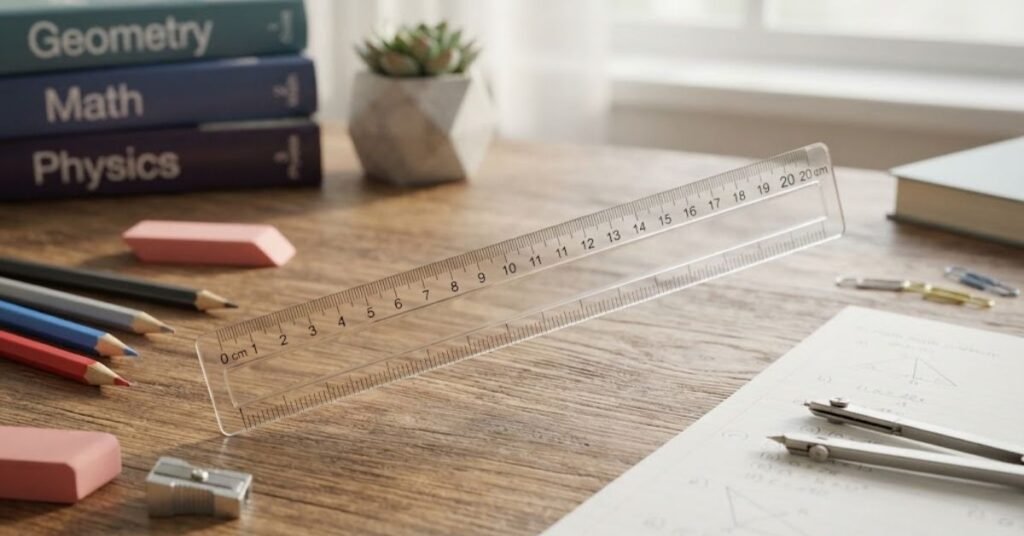
This one’s not a coincidence, it’s the actual definition. A classic school ruler measures exactly 20 cm from end to end, making it the single most precise object on this entire list.
If you want zero guesswork, this is your reference. Every other item here gets compared against something like this ruler anyway, so cutting out the middleman makes sense.
4. A Paperback Novel (Height, Spine to Top)
Trade paperback novels commonly measure close to 19.8 cm from the bottom of the spine to the top of the cover. Pull one off your shelf and check, you’ll likely land within a few millimeters of 20 cm.
This comparison works especially well because paperbacks travel with people. Backpacks, purses, nightstands. It’s a size you already handle daily without thinking about it.
5. A Wooden Cooking Spoon
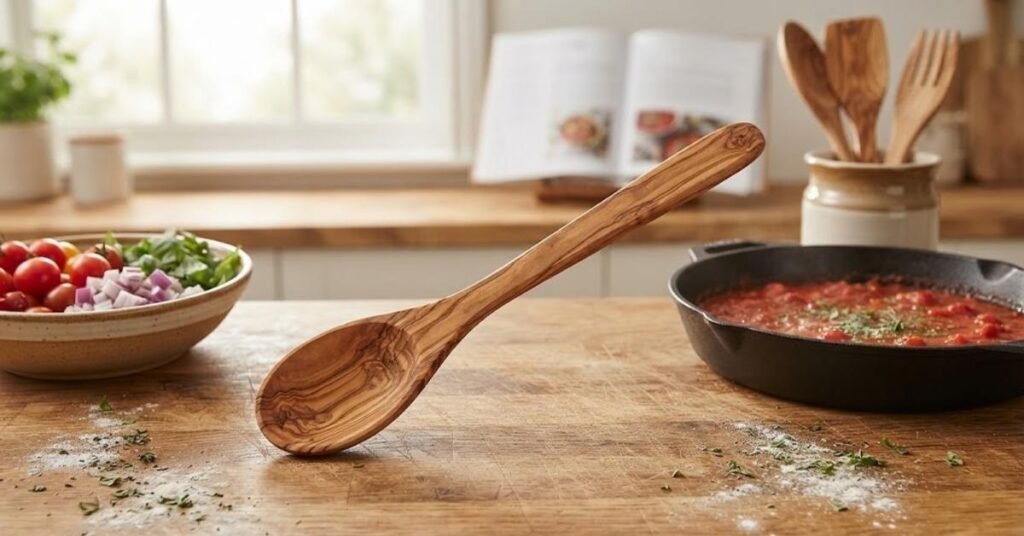
Smaller wooden cooking spoons, the kind used for stirring sauces rather than big stockpots, often measure around 20 cm from tip to handle end. Larger serving spoons run longer, closer to 30 cm.
Check your own kitchen drawer. Kitchen tools like this make for surprisingly good measurement anchors because most households have a version of one within reach.
6. A Tablet Screen Diagonal (Small Compact Tablets)
An 8 inch tablet has a screen diagonal of roughly 20.3 cm, making this one of the most accurate comparisons on the list. Compact tablets in this size range are common for reading and casual browsing.
Hold one up next to a ruler sometime. The diagonal measurement lines up almost perfectly, which makes tablets a genuinely useful mental reference for this length.
7. A Standard Envelope (DL Size)
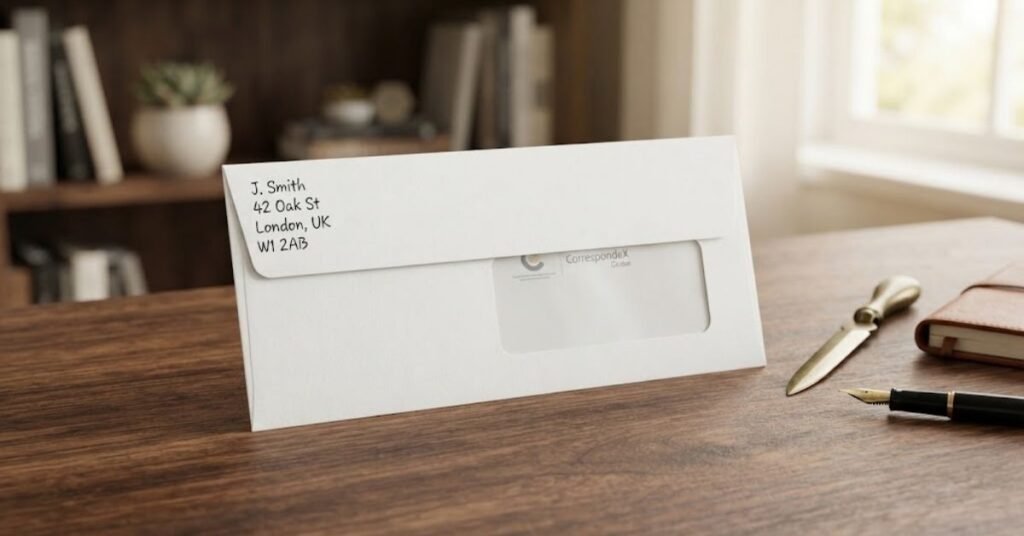
A DL envelope, the kind used for standard letters, measures 22 cm by 11 cm. The longer side sits just above 20 cm, close enough to use as a quick visual check.
Next time mail arrives, glance at a business envelope before tossing it. You’re looking at something within a couple centimeters of your target length.
8. An 8 Inch Chef’s Knife Blade
Chef’s knives commonly come with an 8 inch blade, which converts to exactly 20.3 cm. This makes it one of the most precise real world comparisons you’ll find in any kitchen.
If you cook even occasionally, you likely own one of these. It’s a genuinely useful reference because the blade length is standardized and printed right on most product packaging.
9. A Craft Beer Can (Tall 500 ml Format)

Tall format 500 ml cans typically stand around 16.8 cm to 17 cm, a bit under 20 cm but close enough for a rough visual. Stack a coaster on top and you’d get pretty close to the full 20 cm mark.
This one’s more of an approximation than an exact match, but it’s still a handy everyday object to picture when you need a quick size comparison.
10. A Personal Pizza (20 cm Pizza Size)
An 8 inch personal pizza measures 20.3 cm across, making it one of the cleanest matches on this whole list. Most pizzerias list this exact size on their menu as a small or personal option.
Order one this week and measure it before you dig in. You’ll get a genuinely accurate, entirely edible reference for 20 cm.
11. A Hardback Children’s Book
Many hardback picture books use a trim size around 20 cm by 25 cm, a standard that’s stuck around in publishing for decades. Pull one off a kid’s bookshelf and check the height.
This comparison works well for parents especially, since these books tend to sit around the house in obvious places, coffee tables, bedside shelves, backseat pockets.
12. A Standard House Brick (Length)
A standard UK house brick measures 21.5 cm in length, just over the 20 cm mark. Bricks in other regions vary slightly, but most land within a centimeter or two of this figure.
Next time you’re near a brick wall, look at a single brick lengthwise. That’s roughly your 20 cm reference, built right into the architecture around you.
Left Your Ruler Somewhere? Try These Instead
No ruler on hand? No problem. A dollar bill measures about 15.6 cm long, so 20 cm is a dollar bill plus roughly the width of two fingers stacked on top.
Your own hand works too. Most adult hand spans, thumb tip to pinky tip when stretched wide, land somewhere between 18 and 22 cm depending on hand size. Measure yours once with an actual ruler, then you’ve got a portable measuring tool for life.
Smartphones help in a pinch as well. Most phones run close to 15 cm tall, so 20 cm is a phone plus about a thumb’s width extra. It’s not precise, but it gets you close enough for everyday guessing.
The 20 cm Pizza Angle Most People Miss
Here’s something most articles skip entirely. A 20 cm pizza sounds small on paper, but the math works out differently than people expect. Pizza size scales with area, not just diameter, so dropping from a 25 cm pizza to a 20 cm one cuts the actual eating surface by more than a third.
That’s a bigger drop than the numbers alone suggest. If you’re comparing menu options and see an 8 inch versus 10 inch personal pizza, you’re not looking at a small difference, you’re looking at roughly 36% less pizza.
This matters beyond food too. Anytime you’re comparing round objects, plates, lids, tabletops, small changes in diameter create much larger changes in surface area. It’s worth keeping in mind whenever you’re sizing something up by eye.
20 cm Compared to Nearby Sizes
Context helps more than isolated numbers do. Fifteen centimeters is roughly a smartphone’s height. Twenty five centimeters is close to a standard sheet of A4 paper’s long edge. Thirty centimeters is a foot, give or take a hair.
Twenty centimeters sits right in the middle of that range, bigger than your phone, smaller than a page of paper. Thinking of it as the midpoint between those two familiar objects makes it far easier to picture without pulling out a measuring tape every time.
This kind of relative comparison tends to stick better than raw numbers anyway. Your brain remembers “bigger than my phone, smaller than a sheet of paper” far longer than it remembers “7.874 inches.”
FAQs
Is 20 cm the same as 8 inches?
Not exactly. Twenty centimeters equals 7.874 inches, just under 8 inches. The difference is small enough that people round it up in casual conversation, but it’s not a precise match.
What everyday object is closest to exactly 20 cm?
An 8 inch chef’s knife blade and an 8 inch personal pizza both convert to 20.3 cm, making them two of the most accurate real world matches available.
How many millimeters are in 20 cm?
There are 200 millimeters in 20 cm. Since each centimeter contains 10 millimeters, multiplying 20 by 10 gets you there instantly.
Is 20 cm considered small or large for a pizza?
It’s on the smaller end for a personal pizza, typically labeled as an 8 inch or “small” option on most menus. Compared to a standard 30 cm pizza, it offers noticeably less surface area, not just a slightly smaller circle.
Can I measure 20 cm without a ruler?
Yes. A dollar bill plus roughly two finger widths, or most adult hand spans stretched wide, will get you very close to 20 cm without any tools.
Why does 20 cm feel harder to picture than 10 cm or 30 cm?
Round numbers like 10 or 30 tend to match up with familiar objects more naturally. Twenty sits in a gap between common references, which is exactly why comparison lists like this one exist.

James Walker is a content writer and researcher with a passion for making everyday information simple, useful, and easy to understand. He enjoys researching measurements, dimensions, size comparisons, and interesting facts and turning them into clear, engaging content for readers.
Through his work at HipeDigest, James focuses on providing informative and reader-friendly articles that combine accuracy, simplicity, and practical examples. His goal is to help readers discover useful information while making every topic enjoyable and easy to explore.
