

Ever held a measuring tape and still felt confused about length? You’re not alone.
Five inches sounds simple on paper. But without a ruler in hand, most people can’t picture it right away. That’s the gap this guide fills.
By the end, you’ll have a mental size guide so sharp you won’t need a tape measure for quick checks again.
How Long Is 5 Inches, Exactly?
Five inches equals 12.7 cm, or 127 mm if you’re working in millimeters. In feet, that’s roughly 0.42 ft. In meters, it comes out to 0.127 m.
That’s the exact length. But numbers on their own don’t mean much until you connect them to something real. A 12-inch ruler shows five inches as less than half its total length, right around the midpoint mark minus a bit.
Think of it this way. Five inches is shorter than a standard pencil but longer than your thumb. It’s a small measurement, yet it shows up constantly in daily life, from office supplies to kitchen items you touch every day.
What Does 5 Inches Look Like on Your Hand?
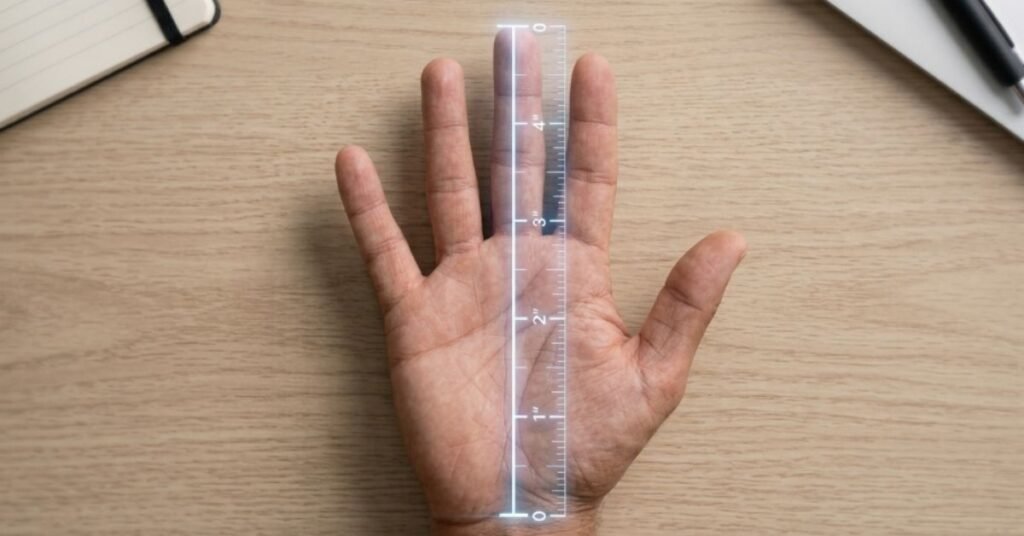
Here’s a trick barbers, tailors, and carpenters have used forever: your own body as a portable measuring reference.
For most adults, the width of your palm (across the base of four fingers) measures close to 4 inches. Add your thumb width, and you’re nearly at five. This hand measurement trick works because your hand is always with you, no ruler required.
Another quick method: measure from the base of the thumb to the base of the pinky when your hand is spread wide. For an average adult, that stretch often lands close to five inches. It won’t be an exact match every time since hand sizes vary, but it’s a solid rough estimate when you’re in a pinch.
This is what makes human body references so handy. You carry your own measurement without ruler wherever you go.
Quick Reference Table
Sometimes a visual reference beats paragraphs of text. Here’s a fast length comparison chart for five inches across different measurement units.
| Unit | Approximate Value |
| Inches | 5 in |
| Centimeters | 12.7 cm |
| Millimeters | 127 mm |
| Feet | 0.42 ft |
| Meters | 0.127 m |
Keep this table bookmarked. It’s a handy unit conversion cheat sheet for DIY projects, home projects, or whenever a product page lists dimensions you’re trying to picture.
13 Everyday Objects That Are About 5 Inches Long
Numbers stick better when they’re tied to common objects you already know. Below are thirteen everyday examples that hit close to five inches. Some are an exact match, others are very close, but all work as a reliable mental model.
1. Standard Index Card
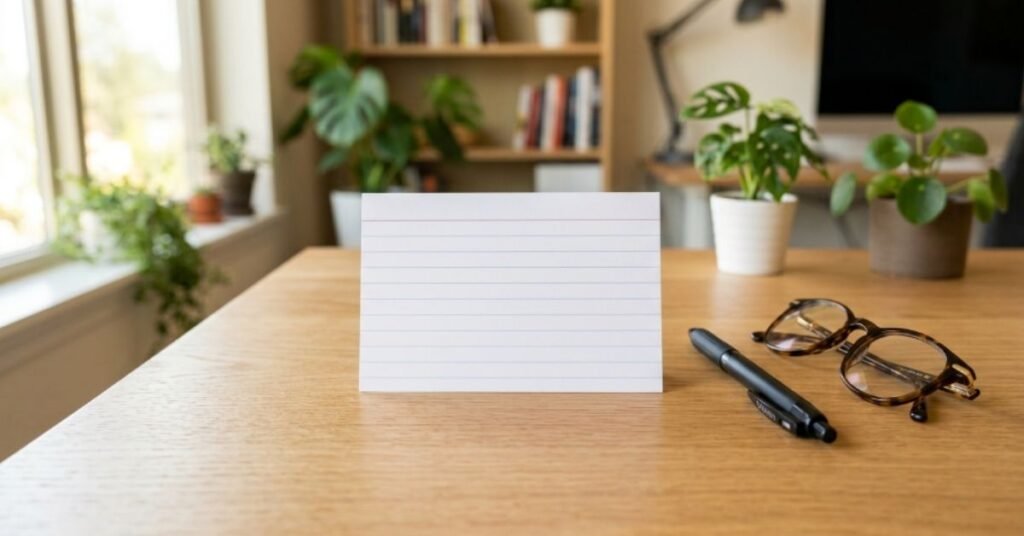
A standard index card, often called a 3×5 index card, measures exactly five inches on its longer side. This makes it one of the most exact length matches on this entire list.
Teachers use these for flashcards, students use them for notes, and offices still keep a stack around for quick reference. Next time you spot one on a desk, you’re looking at a near-perfect physical dimensions example of five inches.
Grab one from a drawer right now if you have access to one. Hold it up. That’s your baseline for everything else on this list.
2. Computer Mouse
Most standard computer mouse models run close to five inches from front to back. Not every ergonomic mouse matches this exactly, but the average office mouse lands right in that range.
This is a great tech accessories comparison because a mouse sits on your desk all day. You’ve touched one recently, which makes the size comparison instant and practical.
Next time you’re shopping for a new mouse online, check the product dimensions listed. You’ll likely see something close to five inches in length, confirming this everyday match.
3. Small or Compact Smartphone
Older phones, budget phones, and some compact models fall around five inches in height. Today’s flagship phones run larger, but plenty of mid-range phones and older devices still sit at this approximate length.
If you’ve held an older iPhone or a smaller Android model, you already have this size perception locked in. It’s a familiar object that most people carry daily.
This comparison works especially well for anyone shopping for a case or holder, where product comparison between phone sizes actually matters.
4. Standard Soda Can
A standard soda can, the kind you grab from a fridge or vending machine, measures about 4.83 inches tall. That’s remarkably close to five inches, making it a near-exact match.
This is one of the most relatable kitchen and household items on the list because almost everyone has held an aluminum soda can at some point. It’s a go-to visual comparison tool.
Next time you’re deciding whether something will fit in a bag or a drawer, picture a soda can standing upright. That mental image alone solves a lot of quick size estimation problems.
5. Nail File
A basic nail file found in most grooming kits or toiletry bags typically measures around five inches in length. It’s slim, portable, and easy to overlook, but surprisingly consistent in size across brands.
This object fits the personal care and grooming category well. If you check a makeup bag or bathroom drawer, you’ll likely spot one matching this approximate dimensions range.
It’s a good example of how portable items are often designed around convenient, pocket-friendly lengths, five inches being one of the sweet spots.
6. Pocket or Travel Comb
A pocket comb, sometimes labeled a travel comb, is built to fit in a jacket pocket or toiletry bag without adding bulk. Most fold-out or slim versions land close to five inches long.
Barbers often carry a version of this in their kit, and it doubles as a great compact reference for men’s grooming tools. If you’ve packed one for a trip, you already know its size by feel.
This is a solid entry for anyone building a packing list or comparing travel kit essentials before a trip.
7. Teaspoon
A standard kitchen teaspoon, from tip to handle end, measures approximately five to five and a half inches. It’s one of the most common kitchen tools you’ll find in any kitchen drawer.
This object works particularly well as a household reference because you likely have several in a drawer right now. Pull one out and measure it yourself for a hands-on check.
It’s proof that some of the best everyday comparison tools aren’t fancy. They’re just sitting in your cutlery tray.
8. Five Paper Clips Lined Up
Line up five paper clips end to end, and you’ll land close to five inches, depending on the clip size you’re using. Standard office supplies paper clips average about an inch each.
This is a fun, hands-on measurement trick for anyone without a ruler nearby. It’s also a great classroom demonstration for teaching kids about measurement estimate techniques using objects already on a desk.
Try it yourself with a handful of clips from your desk drawer. It’s oddly satisfying to see the length build up piece by piece.
9. Travel or Foldable Toothbrush
A foldable toothbrush or compact toothbrush, the kind built for travel, usually measures close to five inches when folded or fully extended, depending on design. These are staples in any solid travel kit.
This object connects well with the grooming category above, since travel-sized tools are often engineered around similar portable lengths for convenience.
If you’ve packed for a flight recently, there’s a good chance a travel toothbrush matching this size was tucked into your bag.
10. Small Grooming Comb (Wide-Tooth Style)
A wide-tooth comb, often used for detangling or styling, frequently measures around five inches. This detangling comb style is common in both home bathrooms and professional barbershop kits.
Unlike the slimmer pocket comb mentioned earlier, this version tends to be a bit sturdier, but the length often lands in the same approximate length range.
If you’ve got curly or thick hair, you probably already own one of these tucked in a drawer.
11. USB Flash Drive (Larger Designs)
While many modern USB drives are tiny, some larger designs, especially ones built like a USB hub or multi-port adapter, stretch close to five inches. These aren’t the norm, but they exist in the tech accessories market.
This entry shows that object size in tech products varies a lot depending on function. A basic flash drive is small, but an expanded hub with multiple ports can reach this length easily.
Worth checking the product page specs next time you’re shopping for one, since sizes vary more than people expect.
12. Small Pocket Notepad
A pocket notepad, like a Moleskine pocket notebook, commonly measures close to five inches in height. These are popular among writers, students, and anyone who prefers a small notebook over a bulky one.
This is a favorite among the office and school objects category because it’s compact enough to slide into a bag without adding weight.
If you’ve ever jotted quick notes on the go, there’s a strong chance your notepad matched this size range.
13. Standard Coffee Mug
A standard coffee mug typically stands close to five inches tall, handle included in some designs. This makes it one of the more relatable furniture and home comparisons since mugs sit on nearly every kitchen counter.
Next time you’re pouring your morning coffee, glance at the mug in your hand. That height is your five-inch visual guide, no measuring tape needed.
It’s proof that some of the clearest real-world size references are things you use before you’ve even had your coffee.
Why Knowing This Measurement Actually Matters
You might wonder why any of this matters beyond trivia. Here’s the honest answer: everyday measurements save time, money, and frustration.
Picture online shopping for a storage container or picture frame. The product page lists dimensions, but numbers alone don’t always click. Knowing that five inches equals roughly a soda can’s height, or an index card’s length, turns confusing specs into a clear mental model instantly.
This skill also helps with home improvement and crafts. Whether you’re checking if something fits a shelf, a gap behind furniture, or a box for shipping, having quick reference objects memorized beats running for a ruler every five minutes.
How to Measure 5 Inches Without a Ruler
No measuring stick nearby? No problem. Here are a few no-tool measurement tricks worth remembering.
- Use your hand reference: palm width plus thumb, as covered earlier
- Grab a standard index card, since its long side is an exact match
- Line up five paper clips for a rough but workable estimate
- Picture a standard soda can standing upright for a near-perfect comparison
- Use a dollar bill, which measures about 6.14 inches, and estimate slightly less than its full length
These tricks won’t replace a proper tape measure for precise work. But for casual estimates, they’re fast, free, and surprisingly accurate.
Five Inches vs Other Common Lengths
Context helps too. Five inches is shorter than a standard 6-inch sub sandwich but longer than a credit card, which measures about 3.4 inches.
It’s also shorter than a typical smartphone box but longer than a AA battery. Comparing five inches against these nearby lengths sharpens your size perception even further, since your brain naturally understands things better in relative terms.
Common Mistakes People Make When Estimating Length
Even with good reference objects, people slip up. A few patterns show up again and again.
- Assuming all hands measure the same, when palm width actually varies by person
- Confusing centimeters and millimeters, leading to measurements ten times off
- Trusting eyeball guesses on product pages instead of checking listed dimensions
- Forgetting that folded or compact items may list length differently in packing specs
Avoiding these small errors makes your size estimation far more reliable, especially when it actually counts.
Final Thoughts
Five inches isn’t a complicated number, but it’s easy to misjudge without a clear visual reference. Now you’ve got thirteen real-life examples, a quick reference table, and a few no-tool measurement tricks tucked away for next time.
Next time you’re shopping online, packing a bag, or just curious about object size, you won’t need to search again. You’ll already know exactly what five inches looks like, because you’ve held it in your hand more times than you realized.
Got a favorite everyday example we missed? Drop it in the comments below and help other readers build their own size guide.

James Walker is a content writer and researcher with a passion for making everyday information simple, useful, and easy to understand. He enjoys researching measurements, dimensions, size comparisons, and interesting facts and turning them into clear, engaging content for readers.
Through his work at HipeDigest, James focuses on providing informative and reader-friendly articles that combine accuracy, simplicity, and practical examples. His goal is to help readers discover useful information while making every topic enjoyable and easy to explore.
